If your toilet won’t stop running, starts refilling when nobody has flushed it, or hisses quietly in the background, something inside the tank has stopped sealing properly. Water is slowly escaping, and the toilet keeps topping itself back up.
The good news is that it’s almost always one small part rather than the whole toilet, and most of these repairs are done in a single visit.
What catches people out is how quietly it happens. The water runs straight into the bowl, so there’s nothing on the floor to warn you, and plenty of homeowners only find out when the bill arrives. It’s one of the most common calls we get from Kingsgrove homeowners.
How urgent is it?
A small trickle isn’t an emergency, but it won’t fix itself. A toilet that runs non-stop wastes a lot more water. The most urgent problem is when the small tap on the wall behind the toilet won’t turn off, because then you can’t stop the water. Tick what you’re noticing for a rough guide.
What Causes a Toilet to Keep Running?
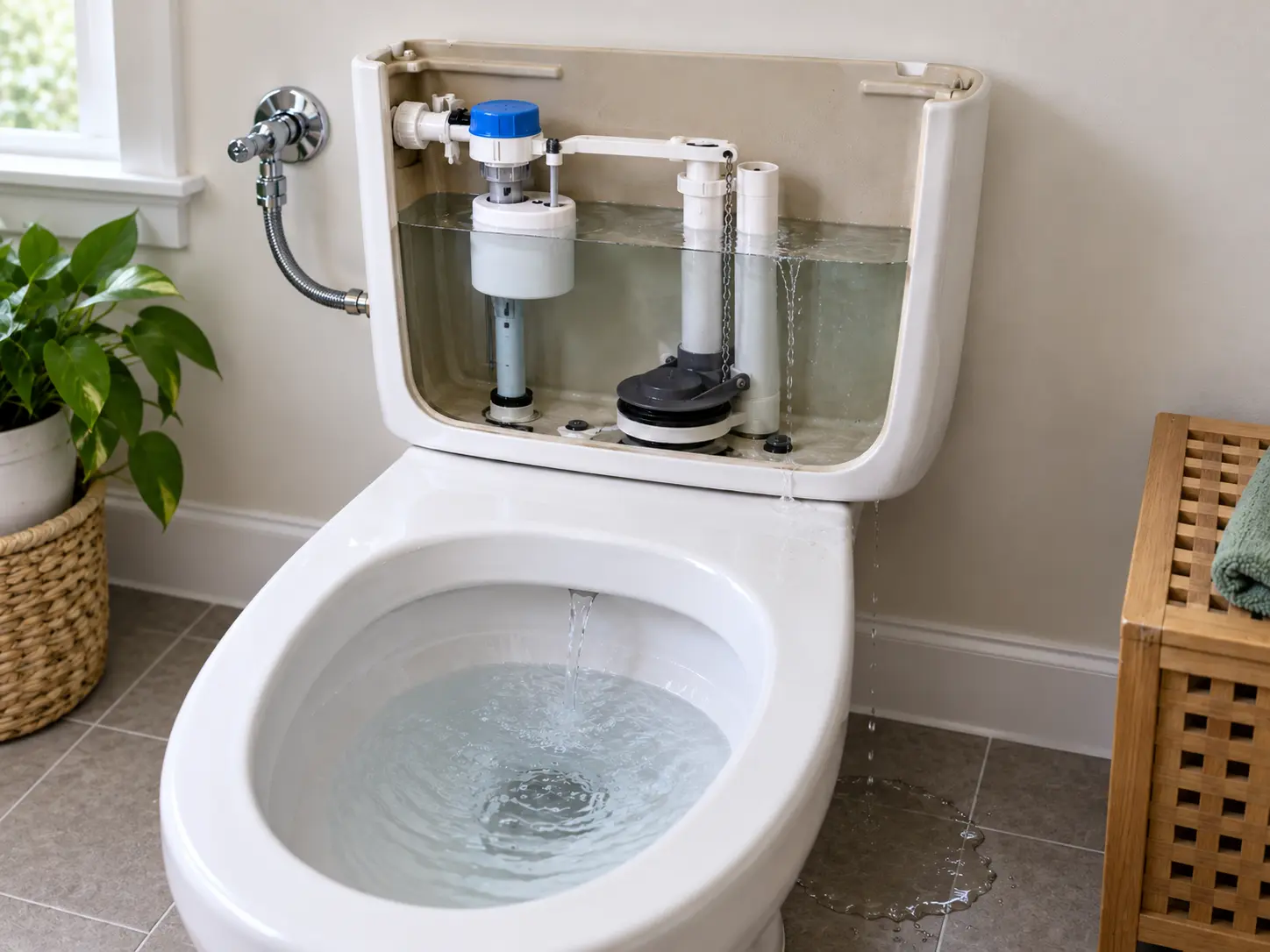
There are only a few parts inside the tank, and each has one simple job. The fill valve lets fresh water into the tank and switches off once it’s full. It knows when to stop thanks to a small plastic float that rises with the water, a bit like a fishing float. At the bottom of the tank, a rubber seal holds the water in until you press the button. In the middle sits the overflow pipe, a safety pipe that sends extra water into the bowl so the tank can never flood your bathroom. When any of these parts wears out or sticks, water keeps moving when it should be sitting still.
1
Rubber seal
The seal goes hard and water slowly slips into the bowl.
2
Fill valve
The valve doesn’t fully switch off, so water keeps coming in.
3
Float
The float sits too high, so water keeps spilling into the overflow pipe.
4
Flush button
The button sticks and holds the seal slightly open.
5
Old parts
Older seals and valves simply reach the end of their life.
How to spot a hidden toilet leak
Toilet leaks are easy to miss, because the water goes straight into the bowl and down the drain. There’s no puddle on the floor. Here’s how to catch one.
Listen at night
When the house is quiet, a toilet refilling by itself is easy to hear.
Watch the bill
A water bill that jumps with no change at home is a common sign of a hidden leak.
Check the bowl
Small ripples at the back of the bowl long after a flush mean water is still coming through.
Test the button
Flush and watch. If the button doesn’t pop straight back up, it may be holding the seal open.
Why the toilet’s age matters
Rubber parts go hard over time, so older toilets usually leak for different reasons than newer ones. Many newer bathrooms also hide the tank inside the wall, which we reach through a panel behind the button. Either way, the fix starts by finding which part has failed.
How we fix a running toilet
We don’t start by swapping parts. We start by watching the toilet fill and empty, so we know exactly which part is at fault.
Step 01
Find where water is escaping
We watch the tank fill and then sit still. Water running into the bowl points to the rubber seal. Water spilling into the overflow pipe points to the fill valve or float.
What we look for
- Water moving into bowl
- Water level in the tank
- How the valve and button work
Step 02
Identify the faulty part
With the water turned off at the wall, we check the parts inside the tank and match the replacement to your toilet’s make and model.
Step 03
Test the toilet again
The toilet gets flushed, refilled and then left alone. It should fill to the right level, shut off cleanly and stay silent, with no movement in the bowl once the cycle finishes.
- Leak stopped
- Refill checked
- Flush tested
Method matched to cause
Repair the part that failed
Depending on what turns up, the fix might be an outlet seal, an inlet valve, a float adjustment or a new flush mechanism. On older or concealed cisterns, parts availability and access also shape what’s worth doing.
- Washer check
- Seal check
- Cartridge check
- Connection check
What affects the repair cost?
The same noise can mean very different jobs. Replacing a seal in a standard tank is quick. A tank hidden in the wall takes longer to reach. Some older toilets need a full set of new parts because the individual ones aren’t made anymore. That’s why we give you a price after we’ve seen the toilet, not over the phone.
| Situation | Likely method | What affects the job |
|---|---|---|
| Faint trickle | Replace rubber seal | Seal condition and toilet design |
| Random refilling | Service or replace fill valve | Valve type and float setting |
| Sticking button | Repair flush button | Button design and access |
| Constant running | Find and fix the failed part | Which part failed and water shut-off |
A 2-minute test you can do yourself
Carefully lift the lid off the tank and put it somewhere safe. Add a few drops of food colouring to the water, then wait 30 minutes without flushing. If colour shows up in the bowl, the rubber seal is leaking. While the lid is off, check whether water is running into the overflow pipe in the middle. Leave it there, and don’t force the wall tap or take parts out.
Safe to check
- Do the food colouring test
- Check the water level
- Listen for unexpected refilling
- Watch the flush button return
Time to call a plumber
- Water runs non-stop
- Toilet keeps refilling itself
- Water spills into the overflow pipe
- Wall tap won’t turn off
The bottom line
A quiet toilet leak is still a leak
Most toilet leaks never touch the floor. They run quietly into the bowl, day and night, and show up on your water bill instead. Caught early, it’s usually one small part and a quick repair.
Water Workx Plumbing can find which part is letting water through and explain the fix before any work starts.
Remember thisIf your toilet refills when nobody has flushed it, water is leaking somewhere. The fix is finding which part.
Toilet Cistern Leak FAQs
Why does my toilet refill on its own?
Water is slowly leaking out of the tank, usually past a worn rubber seal at the bottom. When the level drops, the tank tops itself back up.
Why does my toilet keep hissing?
A hiss is water still coming into the tank. Either the fill valve isn’t switching off properly, or the float is set too high and water is running into the overflow pipe.
What is a toilet cistern?
It’s just the plumber’s word for the tank that holds the water for each flush. On newer toilets it’s often hidden inside the wall, with only the flush button showing.
Can I fix it myself?
You can do the food colouring test and check the water level. Replacing parts inside the tank is best left to a licensed plumber, so it’s done properly and tested afterwards.
Do I need a new toilet?
Rarely. Toilet tanks are designed to have parts replaced. A new toilet only makes sense if the tank is cracked or parts for that model are no longer made.
Who fixes a running toilet?
A licensed plumber. They’ll find which part has failed, replace it with one that suits your toilet and check it fills and stops properly.
Still hearing that toilet refill? Let’s sort it out
Water Workx Plumbing looks after homes across Kingsgrove and the surrounding suburbs. We’ll find what’s causing the leak, explain it in plain English and give you a fixed price before any work starts. Call Peter and the team.
Contact Details
Please feel free to contact us with any questions and queries you might have. We are always happy to offer advice and FREE Quotes.
Send Us a Message
Complete the form below to send an enquiry, or phone us today!