The bathroom is quiet, but the toilet keeps making that faint refill sound long after anyone used it. A toilet cistern leaking Kingsgrove problem can look harmless because the water often disappears straight into the bowl, but that hidden trickle usually means something inside the cistern is not sealing, shutting off or filling properly.
- Constant trickle Water is passing from the cistern into the bowl.
- Refill noise The inlet valve may be topping up again and again.
- Moving bowl water The pan water ripples even when nobody flushed.
- Sticking button The flush mechanism may not be returning cleanly.
- Higher water use A silent leak can keep running without obvious puddles.
Kingsgrove homes can have older toilets, renovated bathrooms, rental properties and mixed cistern parts fitted over time. That matters because a leak inside the cistern may come from the outlet valve, inlet valve, flush button, seal, float or ageing internal parts.
Check the cistern before guessing
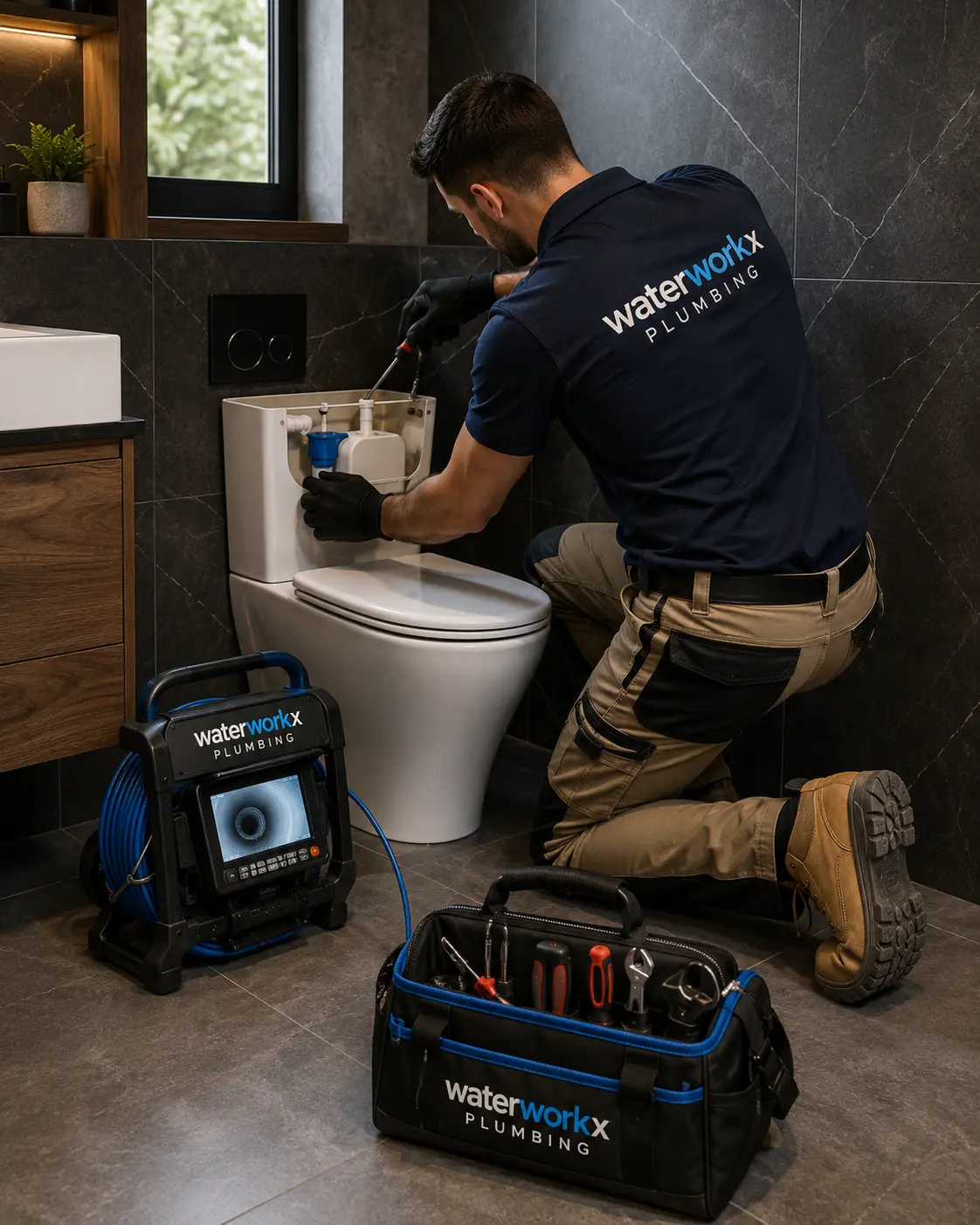
A toilet cistern leaking Kingsgrove issue usually means the inlet valve, outlet valve, flush seal, float or button mechanism is not working properly. A minor case may be one faint trickle into the bowl with no water on the floor. A serious case can involve constant refilling, a sticking flush, water running into the pan, a valve that will not shut off or a toilet that keeps wasting water. Call a licensed plumber when the sound keeps returning, the cistern refills by itself or the toilet will not stop running.
Soft trickle
You may hear water before you see anything. That usually means water is escaping into the bowl.
Repeat refill
The cistern fills again without a flush. That points to water leaving the cistern slowly.
Running toilet
Water that keeps running needs attention. If the valve will not shut off, call for help.
Signs the cistern is leaking
A cistern leak can be easy to miss because it often stays inside the toilet. The pattern matters: whether the cistern refills by itself, whether the flush button sticks, whether water ripples in the bowl and whether the sound happens day and night. A visible puddle is not the only sign of a leak. The quiet ones can keep running because the water goes straight into the pan.
Bowl ripples
Moving water after use means the cistern may be leaking.
Button sticks
A stuck flush can stop the seal closing.
Cistern refills
Random refilling points to water leaving the tank.
Noise returns
Repeated hissing suggests the inlet valve is topping up.
Why older toilets matter
In Kingsgrove, a bathroom renovation can leave a newer pan connected to older valves or mixed internal parts. Rental properties can also have small toilet issues ignored until the noise becomes constant. Older cistern parts can harden, warp or stop seating cleanly. The right next step is finding which part is letting water pass, not just pushing the button harder.
What causes cistern leaks?
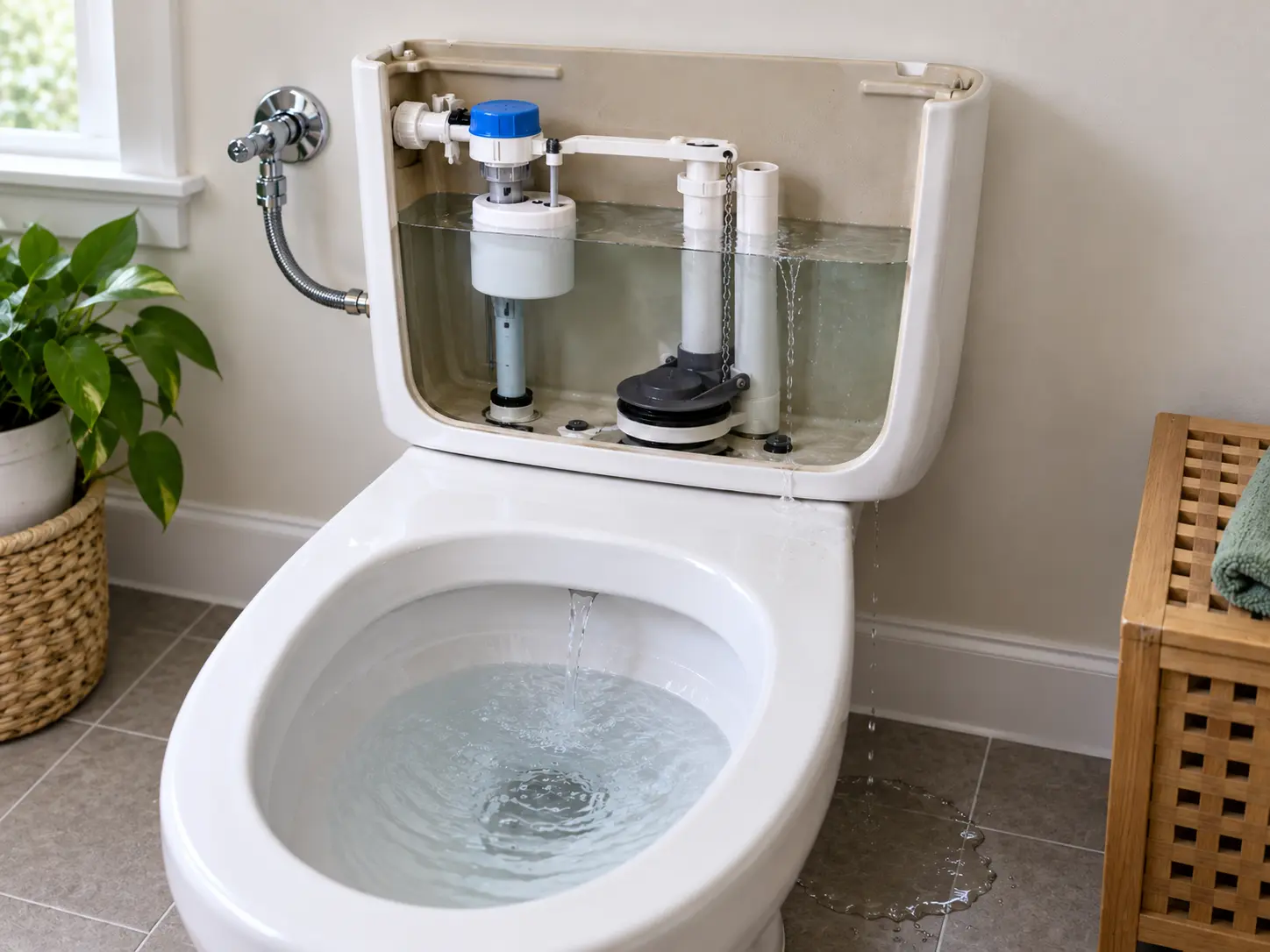
The cause decides whether the toilet needs a small part repair, valve adjustment or replacement advice. Treating every running toilet as the same fault wastes time because inlet valves, outlet valves and flush seals fail differently. A proper check looks at the water level, flush button, seal, valve shut-off, pan trickle and whether the cistern refills by itself.
1
Flush seal
A worn seal lets water pass into the bowl.
2
Inlet valve
A faulty inlet valve can keep topping up.
3
Float
A float issue can set the water level too high.
4
Button
A sticking button can hold the flush open.
5
Ageing parts
Old parts can harden, warp or stop sealing.
How urgent is your cistern leak?
A faint trickle can be less urgent when the toilet still works and the water stops after a normal flush. A leak becomes more concerning when the cistern refills by itself, the button sticks or the inlet keeps hissing. The serious cases are the ones where water keeps running, the valve will not isolate or the toilet cannot be controlled normally. This tool helps guide the next step, but it does not diagnose the cistern.
How toilet cistern leaking Kingsgrove gets fixed
A licensed plumber starts by checking whether water is entering, leaving or overflowing inside the cistern. The sound is the clue, not the full answer. The method follows the failed part, whether it is the seal, inlet valve, float, button mechanism or isolation valve.
Step 01
Read the cistern
The first step is checking the water level, refill pattern and whether the bowl shows movement. That helps separate an inlet problem from an outlet seal problem.
What we look for
Main cistern clues
- Bowl water movement
- Refill sound pattern
- Button and valve action
Step 02
Match the part
A worn flush seal is different from a faulty inlet valve. The repair should match the part that is failing, not just the sound it makes.
Step 03
Test the stop
Once the part is repaired or adjusted, the toilet should be tested again. The aim is clean shut-off, normal refill and no hidden trickle into the bowl.
- Leak stopped
- Refill checked
- Seal tested
Method matched to cause
Repair depends on the cistern
Toilet cistern faults need the right part checked before replacement advice makes sense.
- General Plumbing
- Blocked Toilets
- Emergency Plumbing
- Renovations
What changes the method and cost?
The noise from the toilet does not show the whole job. A worn seal is not the same as a failed inlet valve, sticking button, cracked part or isolation valve that will not close. Access, cistern style, part availability, toilet age and whether the water can be isolated all affect the scope. An exact quote follows an inspection because the failed part needs to be confirmed before repair begins.
| Situation | Likely method | What affects the job |
|---|---|---|
| Faint bowl trickle | General Plumbing | Seal condition and cistern type |
| Random refill sound | General Plumbing | Inlet valve and float action |
| Sticking flush button | General Plumbing | Button style and access |
| Older Kingsgrove toilet | General Plumbing | Part age and availability |
What to check and when to stop
It is reasonable to listen for refill sounds and watch whether water moves in the bowl after the toilet has not been used. You can also keep the area dry and clear so any visible leak is easier to notice. The line is pulling cistern mechanisms apart, forcing buttons, twisting stiff isolation valves or working on parts you do not understand. Plumbing work in NSW requires the right licence or certificate, and a valve that will not shut off should be handled carefully.
Safe to try yourself
- Listen for refill sounds
- Watch bowl water movement
- Keep floor area dry
- Avoid forcing the button
Time to call a professional
- Water runs without stopping
- Cistern refills by itself
- Flush button keeps sticking
- Valve will not shut off
The bottom line
A quiet toilet leak still counts
A cistern leak can be minor when it is faint, occasional and caught early. It becomes serious when the toilet keeps refilling, the flush mechanism sticks, water runs constantly or the shut-off valve will not close. Waiting can turn a small internal leak into wasted water, constant noise, worn parts and a toilet that becomes harder to control. Water Workx Plumbing can inspect the cistern, identify the likely failed part and provide honest, fixed, upfront pricing before work begins. The right fix stops the leak at the part that failed, not just the sound you can hear.
Remember this
A toilet can leak without leaving a puddle. If the cistern keeps refilling, the water is going somewhere.
Toilet Cistern Leak FAQs
Why is it leaking?
A toilet cistern usually leaks because a seal, inlet valve, outlet valve, float or button mechanism is not closing properly. The cause depends on whether water is entering, leaving or overflowing inside the cistern.
Why does it refill?
The cistern refills when water has left the tank and the inlet valve opens again. If nobody flushed, that usually means water is escaping into the bowl or through a faulty part.
Can it leak silently?
Yes. Some cistern leaks run straight into the toilet bowl, so there may be no puddle on the floor. The clues are often a faint trickle, bowl movement or random refill sound.
What affects the cost?
Cistern type, access, part condition, valve behaviour, toilet age and isolation can affect the price. Water Workx Plumbing gives fixed, upfront pricing after inspection.
Should I force the button?
No. Forcing the button can make a sticking flush mechanism worse. If normal use does not stop the water, the part needs checking.
Who fixes cistern leaks?
A licensed plumber can inspect the toilet cistern, check the valves and seals, and repair the failed part where suitable. The right fix depends on what is letting water pass.
Need toilet cistern leaking Kingsgrove help?
Water Workx Plumbing can inspect the toilet cistern, find the part that is letting water pass and explain the repair before work goes ahead. Speak with Peter and the team if your Kingsgrove toilet keeps trickling, refilling, hissing or running after use.
Contact Details
Please feel free to contact us with any questions and queries you might have. We are always happy to offer advice and FREE Quotes.
Send Us a Message
Complete the form below to send an enquiry, or phone us today!