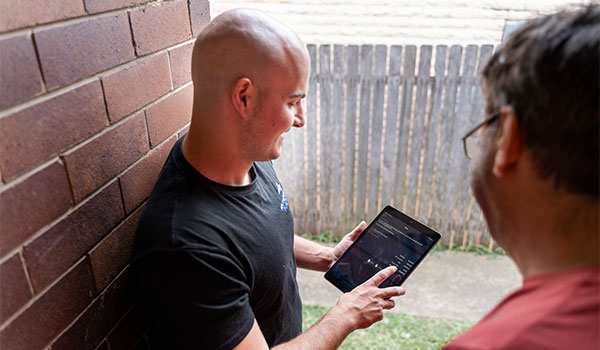
Every so often the toilet starts filling by itself, runs for a minute, then falls quiet again. Nobody flushed it. Plumbers call it a ghost flush, and it’s one of the more common calls we get from Kingsgrove homeowners. What’s happening is simple enough: water is slipping out of the cistern between flushes, the level drops, and the inlet valve wakes up to top it back up. Nothing appears on the floor, so it’s easy to live with for months.
- Keeps refilling The cistern starts filling again without anyone flushing.
- Water trickles A thin stream runs quietly down the back of the bowl.
- Hissing sound The inlet valve never quite shuts off after filling.
- Flush button sticks The button stays down instead of springing back.
- Water use rises A silent leak shows up on the bill long before the floor.
The good news is that cisterns are built to be serviced. A leak almost never means you need a new toilet. It means one part inside has given up, and the whole job is working out which one.
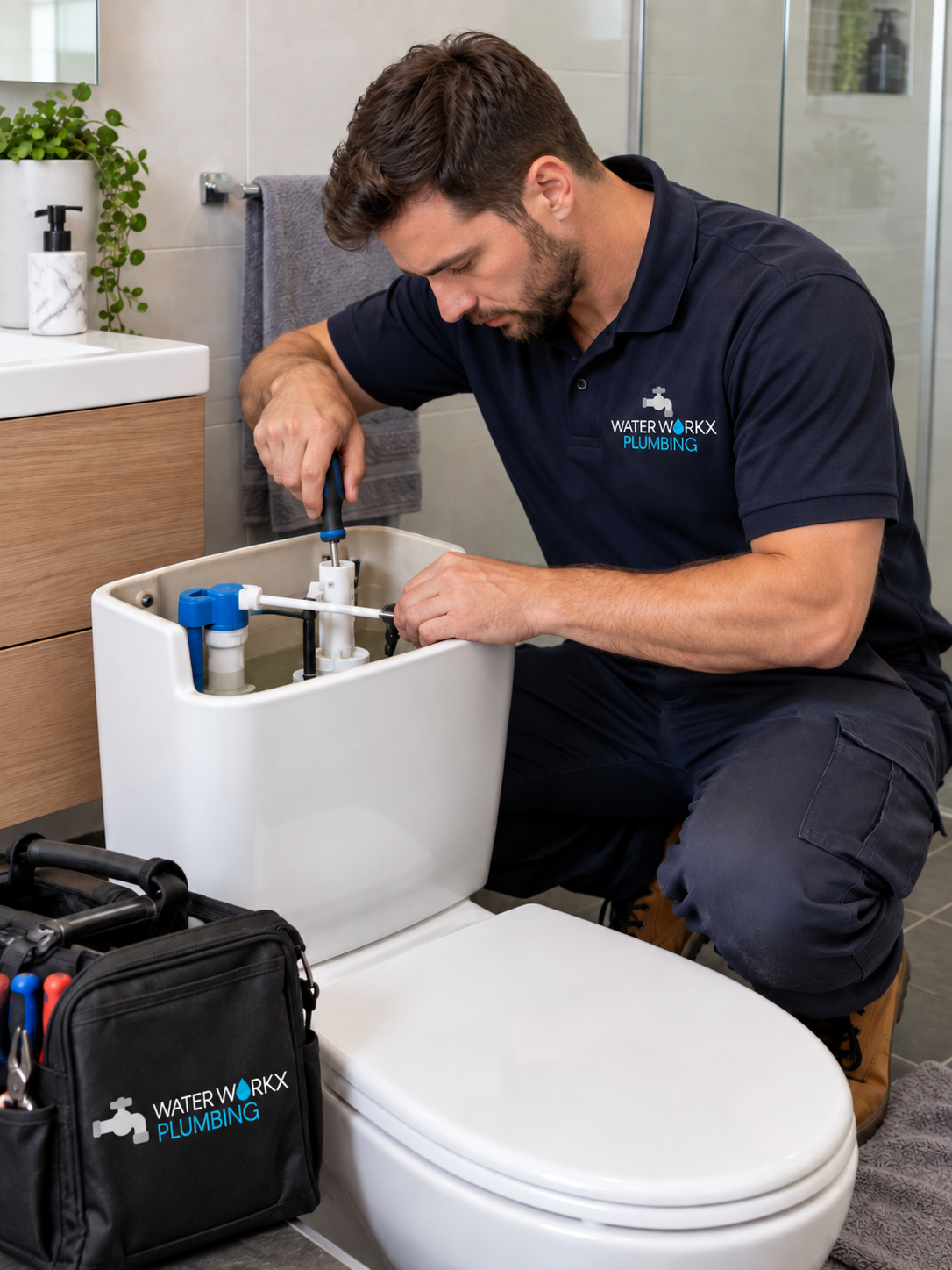
A leaking cistern usually comes down to one part
Water leaves a cistern in one of two directions, and telling them apart is the entire diagnosis. Either it’s escaping down past the flush valve seal at the bottom, creeping into the bowl until the cistern refills to make up the loss. Or the inlet valve isn’t shutting off, so the cistern overfills and the extra water pours away down the overflow tube. From the hallway both sound like a toilet that won’t settle, but they’re different parts and different repairs. If yours refills on its own, hisses between flushes or simply never stops running, it’s worth having the cistern opened up.
Faint trickle
You’ll hear it before you see it. A soft, steady trickle into the bowl means water is sneaking past the seal at the bottom of the cistern.
Random refill
The toilet fills for a minute and stops, with nobody near it. The level has dropped far enough that the inlet valve has kicked in again.
Constant running
When a toilet never stops running, the leak is faster than the cistern can hold. This one wastes serious water and shouldn’t wait.
How to tell your cistern is leaking
Cistern leaks hide well, because the water runs straight into the bowl and away down the drain. No puddle, no damp patch, nothing obviously broken. What gives them away is the pattern. The toilet refills at odd hours, usually at night when the house is quiet. There’s a faint ripple at the back of the bowl long after the flush finished. A hiss carries on when the cistern should already be full. And if your water bill has climbed without anything changing at home, a silent toilet leak is one of the first things worth ruling out.
Bowl movement
Fine ripples keep moving in the bowl well after the flush has finished.
Hissing sound
A hiss that carries on once the cistern is full points at the inlet valve.
Random refilling
The cistern refills by itself, often at night when everything else is quiet.
Sticky flush
A button that stays down can hold the flush valve slightly open.
Why the toilet’s age matters
Rubber seals harden as they age, springs stiffen, and buttons stop returning the way they used to, so an older toilet tends to leak for different reasons than a newer one. Renovated bathrooms add another layer, because a modern in-wall cistern is reached through an access panel rather than by lifting a lid. Between the original homes and the recent renovations around Kingsgrove, we see both constantly. Two toilets making the exact same sound can still need completely different work, which is why the faulty part gets identified before anything is replaced.
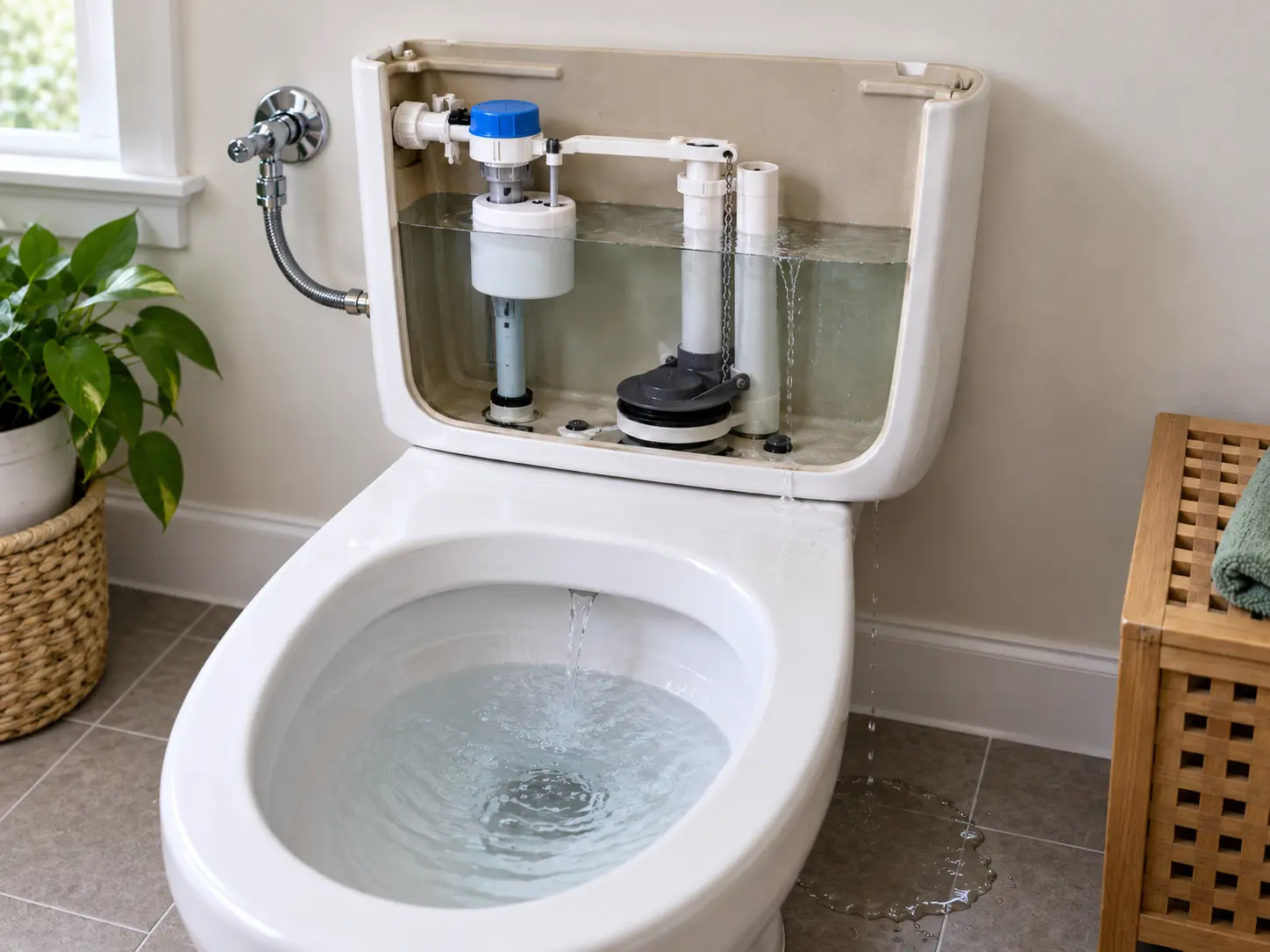
What causes a leaking toilet cistern?
A leaking toilet cistern can be caused by several different internal parts. Water may keep running into the bowl, the cistern may refill repeatedly, or you may hear a constant trickling sound.
Common causes include a worn flush seal, faulty inlet valve, incorrectly adjusted float, sticking flush button, or ageing internal components. Checking where the water is escaping from helps identify the correct repair and avoids replacing parts unnecessarily.
1
Flush seal
A worn seal allows water to escape into the bowl.
2
Inlet valve
The valve does not shut the incoming water off properly.
3
Float
The water level is not being controlled correctly.
4
Button
A sticking mechanism can hold the flush partly open.
5
Worn parts
Ageing components can harden, warp or stop sealing properly.
How urgent is a leaking cistern?
Not every cistern leak is an emergency, but none of them fix themselves. A faint trickle mostly costs you water, quietly, every hour of every day. A toilet that runs non-stop wastes far more and keeps the inlet valve working around the clock, which wears it out faster. The one that needs a plumber today is an isolation valve that won’t shut, because at that point you’ve lost the ability to stop the water at the toilet. Use the guide below to work out roughly where you sit, then get the cistern inspected to confirm it.
How plumbers repair a leaking toilet cistern
The first move isn’t replacing parts. It’s watching the cistern do its job. Our plumber checks where the water sits against the fill line, listens through a full cycle and works out whether water is arriving in the bowl or disappearing down the overflow tube. Those two answers point in opposite directions, and between them they decide the whole repair.
Step 01
Find where water is escaping
The cistern is watched while it fills and while it sits idle, with a dye test if the leak is too slow to see. Colour turning up in the bowl points to the outlet seal. Water spilling into the overflow tube points to the inlet valve or the float.
What we look for
- Water moving into bowl
- Resting water level
- Valve and button operation
Step 02
Identify the faulty part
A perished flush seal, a failed inlet valve and a sticking button are three different jobs. With the water isolated, the internals come out for inspection and the replacement is matched to the make and model of the cistern.
Step 03
Test the toilet again
The toilet gets flushed, refilled and then left alone. It should fill to the right level, shut off cleanly and stay silent, with no movement in the bowl once the cycle finishes.
- Leak stopped
- Refill checked
- Flush tested
Method matched to cause
Repair the part that failed
Depending on what turns up, the fix might be an outlet seal, an inlet valve, a float adjustment or a new flush mechanism. On older or concealed cisterns, parts availability and access also shape what’s worth doing.
- Washer check
- Seal check
- Cartridge check
- Connection check
What affects the repair cost?
Two toilets making the same noise can be very different jobs. Swapping an outlet seal on a standard exposed cistern is straightforward. A concealed in-wall cistern has to be reached through an access panel, which takes longer. Older suites sometimes need a complete valve kit because individual parts are no longer made for that model. Whether the isolation valve still works matters too, since a seized one may need replacing before the cistern can be safely opened at all. That’s why a real price comes after someone has looked at the toilet, not over the phone.
| Situation | Likely method | What affects the job |
|---|---|---|
| Faint trickle | Replace outlet seal | Seal condition and cistern design |
| Random refilling | Service or replace inlet valve | Valve type and float adjustment |
| Sticking button | Repair flush mechanism | Button design and internal access |
| Constant running | Trace inlet or outlet fault | Failed component and water isolation |
What you can safely check yourself
There’s one test worth doing before you call anyone, and it takes two minutes. Lift the cistern lid off carefully and rest it somewhere flat, add a few drops of food colouring to the water, then walk away for half an hour without flushing. If colour appears in the bowl, water is escaping past the flush seal and you’ve just confirmed a silent leak. While the lid is off, have a look at where the water sits: it should stop at the marked fill line, not creep up into the overflow tube. That’s as far as it’s worth going. Don’t force a stiff isolation valve or start pulling the internals apart.
Safe to check
- Run the food colouring test
- Check the resting water level
- Listen for unexpected refilling
- Watch the flush button return
Time to call a plumber
- Water runs continuously
- Cistern repeatedly refills itself
- Water spills into the overflow
- Isolation valve will not close
The bottom line
A quiet toilet leak is still a leak
A leaking cistern doesn’t need to put water on the bathroom floor to cost you money. Most of them run silently into the bowl, day and night, which is why an unexplained jump in a water bill so often traces back to a toilet nobody suspected. Caught early, the repair usually comes down to a single worn seal or valve. Left alone, it wastes hundreds of litres, keeps the inlet valve cycling non-stop and wears out the rest of the mechanism along with it.
Remember thisIf the toilet refills when nobody has flushed it, the cistern is losing water somewhere. The job is finding out which way it’s going.
Toilet Cistern Leak FAQs
Why does my cistern keep refilling?
Because the water level inside it keeps dropping. If nobody has flushed, water is escaping past the flush valve seal into the bowl, and the inlet valve is topping the cistern back up to compensate.
Can a cistern leak silently?
Yes, and most do. The water runs down the back of the bowl without a sound or a puddle. Add a few drops of food colouring to the cistern and wait half an hour without flushing. If the bowl turns colour, the cistern is leaking.
Why does my toilet keep hissing?
A hiss is water moving through the inlet valve. If it carries on after the cistern should have finished filling, either the valve isn’t shutting off or the float is set too high and water is running into the overflow tube.
Does the whole toilet need replacing?
Rarely. Cisterns are designed to be serviced, and most faults come down to one seal, valve or mechanism. Replacement only makes sense when the cistern is cracked, badly corroded or parts for that model are no longer available.
What affects the repair cost?
The cistern type, which part has failed, how accessible it is and whether replacement parts are still made for that model. Concealed in-wall cisterns take longer to reach than standard exposed ones. An inspection confirms the fault before quoting.
Who repairs leaking toilet cisterns?
A licensed plumber. They can confirm whether water is escaping through the flush valve or the inlet side, fit the right replacement part and check the toilet holds its level afterwards.
Still hearing that toilet refill? Let’s sort it out
If your toilet hisses between flushes, refills by itself, runs non-stop or trickles into the bowl, Peter and the team at Water Workx Plumbing can help. We look after homes right across Kingsgrove and the surrounding suburbs. We’ll find which part is letting water through, explain the fix and give you a fixed price before any work goes ahead.
Contact Details
Please feel free to contact us with any questions and queries you might have. We are always happy to offer advice and FREE Quotes.
Send Us a Message
Complete the form below to send an enquiry, or phone us today!