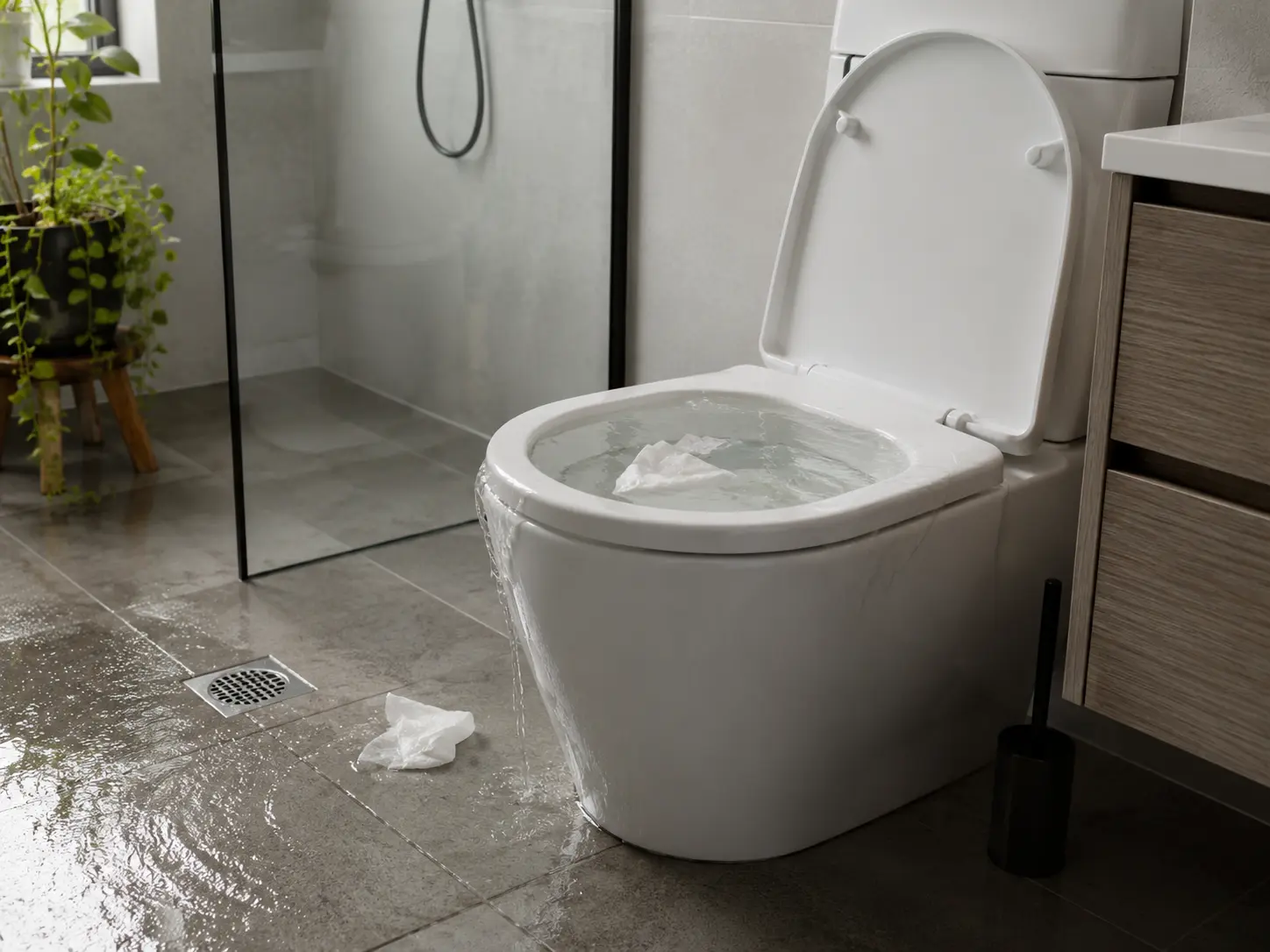
You flush once, the bowl rises instead of dropping, and suddenly you are watching the water line climb toward the rim. An overflowing toilet Kingsgrove problem can be a local toilet blockage, but if water keeps rising, gurgling starts or nearby drains react, the issue may be deeper in the wastewater line.
- Rising bowl Water is not clearing through the toilet trap properly.
- Slow flush Wastewater is moving, but the line is restricted.
- Gurgling sound Air is pushing back because flow is blocked.
- Bad smell Waste may be sitting inside the toilet or drain line.
- Water on floor The problem has moved from plumbing to cleanup risk.
Kingsgrove homes can have older sewer lines, renovated bathrooms, mature tree roots and rental properties where toilets have had years of mixed use. That matters because a toilet overflow may start at the pan, the trap, the branch line or the main sewer connection.
Stop flushing and find the blockage
An overflowing toilet Kingsgrove issue usually means wastewater cannot move through the toilet or sewer line fast enough. A minor case may be one slow toilet with water that settles after use. A serious case can involve water reaching the floor, sewage smell, gurgling drains, repeat overflow or other fixtures backing up. Call a licensed plumber when the bowl keeps rising, wastewater appears or the same toilet blocks again after clearing.
Slow flush
The bowl empties, but it takes longer than normal. That is often the first sign the trap or drain is narrowing.
Gurgling
A gurgle after flushing means air is being forced back. That usually points to a restriction further along the line.
Overflow
Water reaching the floor is the call-now signal. Stop flushing and keep people away from wastewater.
Signs the toilet may overflow
A toilet rarely overflows without warning. The pattern matters: how the flush behaves, whether the bowl rises, whether nearby drains gurgle and whether smell appears after use. One slow flush is different from water spilling onto the floor. Once wastewater leaves the bowl, the problem becomes a hygiene issue as well as a plumbing issue.
Bowl rises
Water climbing after a flush means flow is restricted.
Drains gurgle
Nearby gurgling suggests pressure in the wastewater line.
Flush weakens
A lazy flush can warn before a full blockage.
Waste returns
Wastewater coming back means the line needs urgent help.
Why repeat overflow matters
In Kingsgrove, older sewer pipework and established trees can change what looks like a simple toilet blockage. A toilet may be the first fixture to react even when the restriction sits further down the line. Renovated bathrooms can also hide older drainage behind newer fittings. That is why repeat overflow should be traced, not just plunged until the bowl drops.
What causes toilet overflow?
The cause decides whether the toilet needs local clearing, proper drain clearing or closer inspection. Treating every overflow as paper in the bowl wastes money because wipes, roots, pipe damage and deeper sewer restrictions all behave differently. A proper check looks at how the toilet flushes, whether other fixtures react, where the water backs up and whether the blockage has happened before.
1
Paper
Too much paper can lodge inside the toilet trap.
2
Wipes
Wipes catch inside pipework and hold waste.
3
Objects
Foreign items can block the toilet bend.
4
Tree roots
Roots trap waste in older sewer lines.
5
Pipe damage
Broken pipework can hold waste and collapse flow.
How urgent is your toilet overflow?
A slow toilet can be less urgent if the bowl settles and the problem does not return. A toilet that rises, gurgles or smells is more likely to need proper clearing. The serious cases are the ones where wastewater reaches the floor, another drain reacts or the overflow keeps coming back. This tool helps guide the next step, but it does not diagnose the toilet.
How overflowing toilet Kingsgrove gets cleared
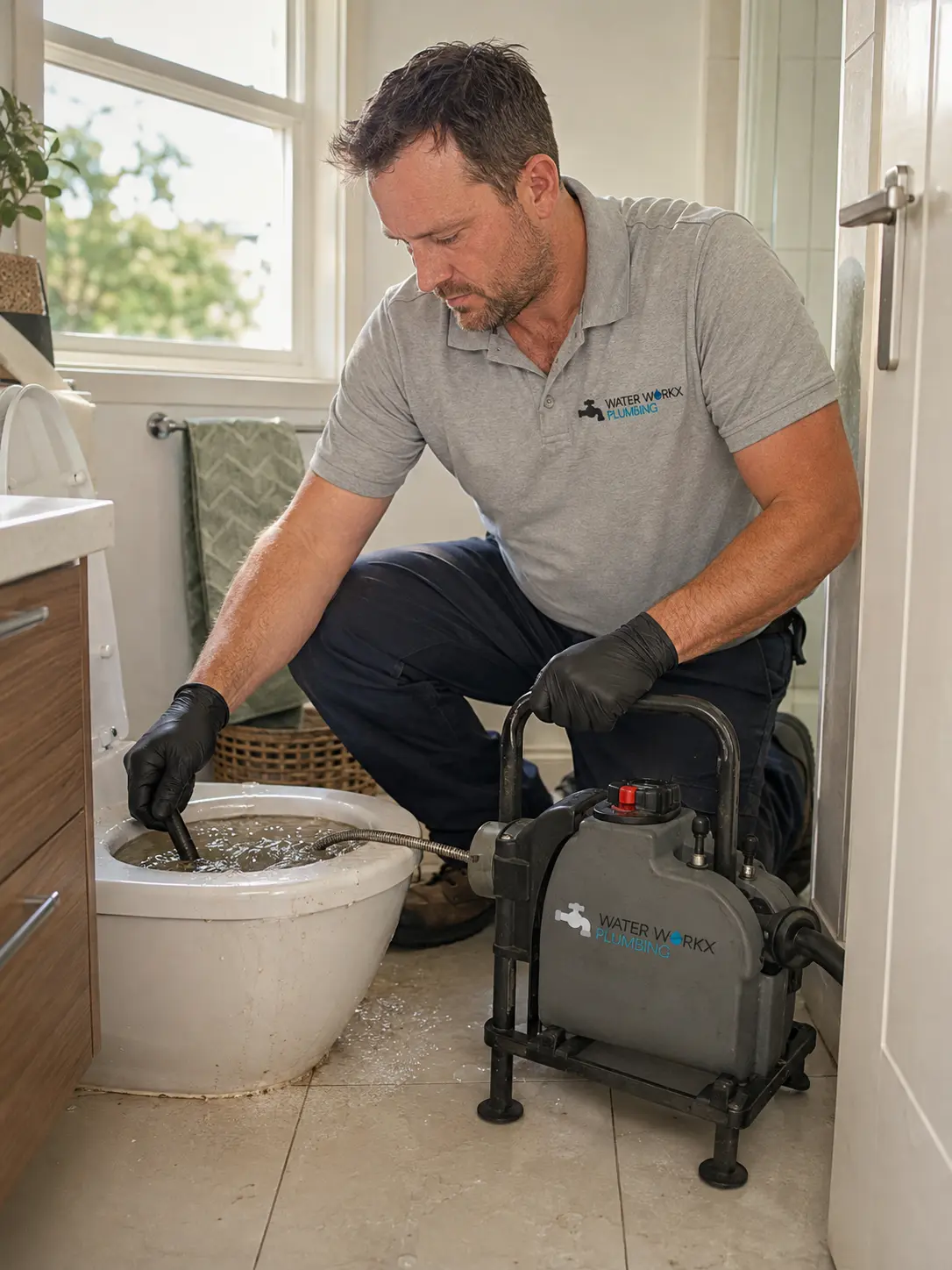
A licensed plumber starts by checking whether the blockage is in the toilet, the branch line or the deeper sewer. The overflow shows where the problem appears, not always where it sits. The method follows the cause, whether it is paper, wipes, a foreign object, roots, sludge or damaged pipework.
Step 01
Read the flush
The first step is checking how the toilet fills, drains and reacts after flushing. Gurgling, smell and nearby drain movement help narrow the blockage location.
What we look for
Main toilet clues
- Bowl rise pattern
- Nearby drain reaction
- Repeat overflow history
Step 02
Match the method
A local toilet blockage is different from roots or damaged sewer pipework. The clearing method should match what is stopping the flow.
Step 03
Check the flow
Once the blockage is cleared, the toilet should be tested carefully where practical. The aim is stable flushing, clear cause and less chance of repeat overflow.
- Flow restored
- Cause found
- Risk explained
Method matched to cause
Clearing depends on the blockage
Toilet overflows often need the restriction removed, not just pushed further along.
- High-pressure jetting
- Electric Eel
- Flex Shaft
- CCTV inspection
What changes the method and cost?
The bowl level does not show the whole job. A paper blockage inside the pan is not the same as wipes in the branch line, roots in older pipework or a deeper sewer restriction. Access, blockage depth, fixture condition, pipe age and whether CCTV inspection is needed all affect the scope. An exact quote follows an inspection because the toilet and drain line need to be checked before the work can be priced properly.
| Situation | Likely method | What affects the job |
|---|---|---|
| Slow single toilet | General Plumbing | Toilet access and pan condition |
| Local toilet blockage | Electric Eel | Blockage position and access |
| Repeat Kingsgrove overflow | CCTV inspection | Roots or pipe condition |
| Wastewater on floor | Emergency Plumbing | Hygiene risk and spread |
What to check and when to stop
It is reasonable to stop flushing, close the toilet lid and move mats or stored items away from the floor. You can also note whether nearby drains gurgle or smell after the toilet is used. The line is wastewater on the floor, repeat overflow, harsh chemicals, forcing tools into the pan or trying to open pipework yourself. Sewage backup can be a health risk, so keep children and pets away from any wastewater.
Safe to try yourself
- Stop flushing the toilet
- Move items from floor
- Note nearby drain sounds
- Keep the area clear
Time to call a professional
- Water reaches the floor
- Wastewater backs up inside
- Other drains react too
- Overflow keeps coming back
The bottom line
A rising bowl is warning you
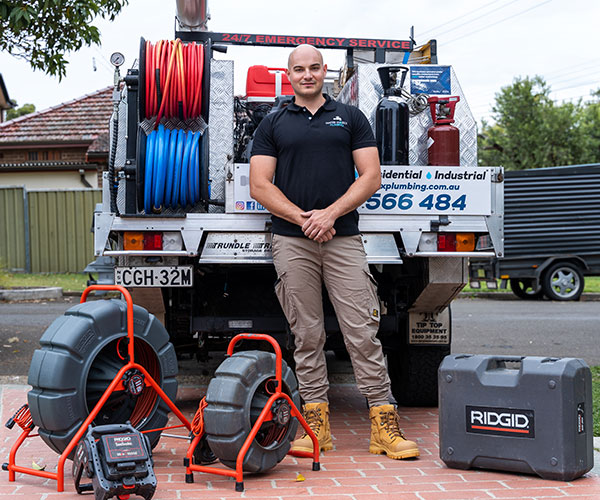
A slow toilet can be minor when it settles and does not return. It becomes serious when the bowl rises, wastewater spills, gurgling starts or other drains react at the same time. Waiting can turn a toilet blockage into floor contamination, smell, bathroom damage and a bigger sewer problem. Water Workx Plumbing can inspect the toilet, clear the blockage and provide honest, fixed, upfront pricing before work begins. The useful fix is the one that finds where the flow stops, not the one that just drops the water for now.
Remember this
A toilet overflow is not solved by flushing again. It is solved by finding why the water had nowhere to go.
Overflowing Toilet FAQs
Why is it overflowing?
A toilet overflows when water cannot move through the trap or drain line properly. The cause may be paper, wipes, a foreign object, roots or a deeper sewer restriction.
Should I flush again?
No. Repeated flushing can send more water into a blocked toilet and push it onto the floor. Stop using the toilet until the blockage is checked.
Why does it gurgle?
Gurgling means air is being pushed through trapped water because the line is restricted. If it happens with a rising bowl, the blockage may be deeper than the pan.
Is overflow dangerous?
Wastewater can carry health risks and should be avoided. Keep children and pets away from the area and arrange plumbing help promptly.
What affects the cost?
Access, blockage depth, toilet type, pipe condition, repeat history and CCTV inspection can affect the price. Water Workx Plumbing gives fixed, upfront pricing after inspection.
Who clears overflowing toilets?
A licensed plumber can inspect the toilet, clear the blockage and check whether the cause is local or deeper. The right method depends on what is blocking the line.
Need overflowing toilet Kingsgrove help?
Water Workx Plumbing can inspect the toilet, clear the blockage and explain what caused the overflow before work goes ahead. Speak with Peter and the team if your Kingsgrove toilet bowl is rising, gurgling, smelling or spilling water onto the floor.
Contact Details
Please feel free to contact us with any questions and queries you might have. We are always happy to offer advice and FREE Quotes.
Send Us a Message
Complete the form below to send an enquiry, or phone us today!