A tap that drips after you’ve turned it off isn’t being stubborn. A small part inside has worn down to the point where it can’t form a seal anymore, and the water pressure behind it does the rest.
The good news is that it’s a cheap part and a quick repair, as long as it’s caught before the dripping damages anything else inside the tap.
Most people live with it for months because it seems harmless. In Hurstville homes the taps are often the originals, and by the time someone calls, the drip has usually worn a second part as well, which is what turns a ten minute job into a bigger one.
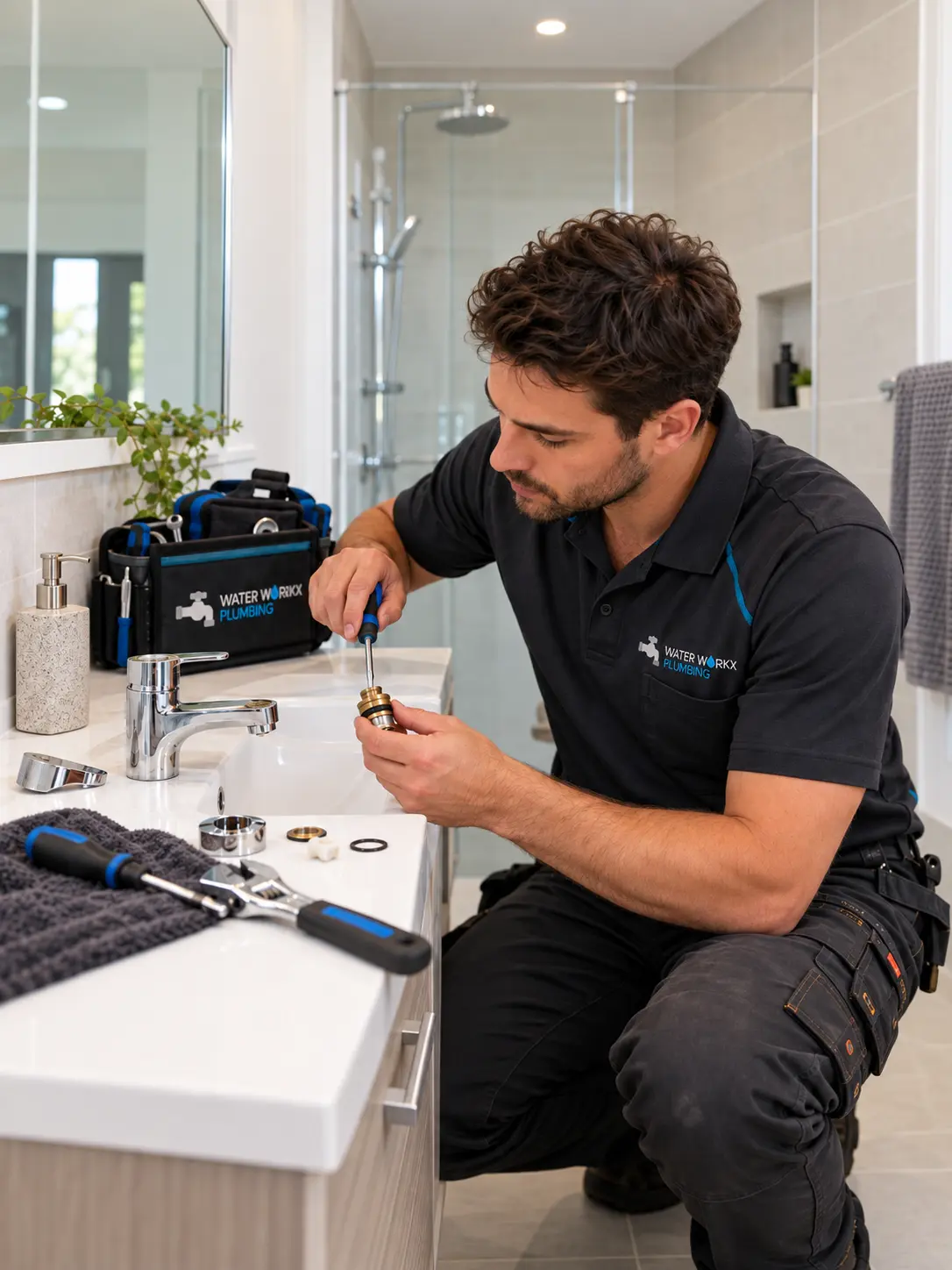
How urgent is your leaking tap?
Some tap leaks are early, contained and easy to plan. Others need faster help because water is reaching cabinetry, the handle is leaking or the tap will not shut off. The key is whether the leak is one slow drip or whether water is spreading beyond the fixture. This tool helps guide the next step, but it does not diagnose the tap.
What Causes a Tap to Drip?
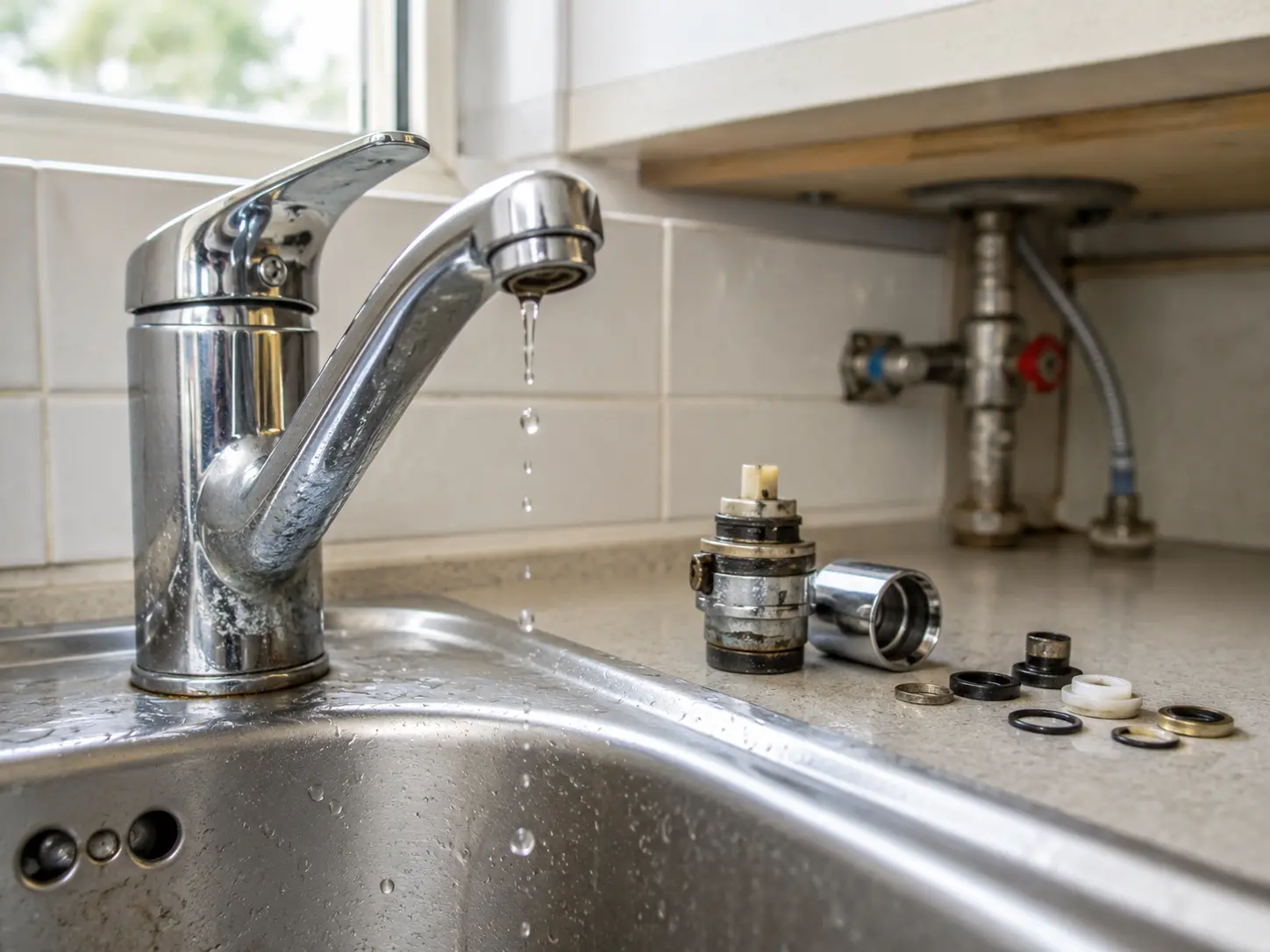
Every tap closes the same way. Turning the handle presses a soft part down onto a hard surface inside the tap, and that contact is what holds the water back. On older taps with separate hot and cold handles, it’s a rubber washer pressing onto a brass seat. On mixer taps, the single lever kind, it’s a cartridge, a sealed part that opens and closes with a quarter turn. Water pushes against that seal every second of the day, so eventually the rubber goes hard or the brass wears rough. Once there’s a gap, water finds it.
1
Washer
The rubber hardens and no longer seals when the tap is closed.
2
Cartridge
The part inside a mixer tap wears and lets water past.
3
Tap seat
The surface the washer presses onto wears rough and keeps dripping.
4
O-ring
A small seal around the handle perishes, so water escapes there instead.
5
Pressure
High water pressure pushes past seals that would otherwise hold.
Signs Your Tap Needs Repairing
Where the water appears tells you which part has gone, and it’s the quickest way to narrow it down.
Drips from the spout
Water keeps coming from the spout after the handle is fully closed. That’s the washer or cartridge.
It needs more force
If you’re closing it harder each time to stop the drip, the seat is wearing.
Water at the handle
Water appearing around the base of the handle is a different seal, not the one that stops the spout.
Marks around the sink
White or green staining shows the drip has been going longer than you think.
Why old tapware matters
Older taps were made to be repaired, which is why a washer costs almost nothing. The catch is matching the parts. Tapware from decades ago often needs a full replacement set because the originals aren’t made anymore, and the same is true of some mixer cartridges once the brand moves on.
How we fix a dripping tap
We find out which part has failed before opening anything up. A washer, a cartridge and a worn seat are three different repairs.
Step 01
Read the tap
We run the tap, close it normally and watch where the water comes from. A spout drip and a handle leak point to completely different parts.
What we look for
What we look for
- Where the water appears first
- How the handle feels when closing
- Whether the tap can be isolated
Step 02
Match the part
We check the seat while we’re in there, because fitting a new washer onto a worn seat just brings the drip straight back.
Step 03
Check the seal
We run the tap, close it with normal hand pressure and watch. It should stop completely, with nothing escaping at the spout or the handle.
- Leak stopped
- Seal checked
- Tap tested
Method matched to cause
Repair follows the fixture
Older taps and mixers take different parts and different methods. If the parts for that model have been discontinued, we’ll tell you upfront rather than fitting something that won’t last.
- General Plumbing
- Bathroom Sinks
- Kitchen Drains
- Emergency Plumbing
What affects the cost?
A slow drip is a smaller job than a tap that won’t shut off. Access matters too, since a laundry tap with open pipework is faster to reach than a basin mixer inside a vanity. Older or uncommon taps sometimes need a full set of parts.
| Situation | Likely method | What affects the job |
|---|---|---|
| Slow spout drip | Replace washer | Tap type and access |
| Handle leaks | Replace seals or O-rings | Seal and spindle condition |
| Mixer tap fault | Replace cartridge | Tap model and parts availability |
| Older tap | Assess repair or replacement | Tap age and fixture condition |
What you can safely check yourself
Dry the tap and the sink completely, then watch for a few minutes. Where the first water appears tells a plumber a lot before they’ve even arrived. Note whether it drips constantly or only after the tap has been used, and which handle is involved.
It is reasonable to wipe the area dry and see where water returns. You can also move items out of the vanity or cupboard so the leak does not soak stored belongings. The line is forcing handles, pulling taps apart, turning stiff valves or working near water and electrical fittings. Overtightening can damage the tap seat and make a simple leak more involved.
Safe to try yourself
- Wipe the tap and sink dry
- Note where the water appears
- Move items from the cupboard below
- Check if hot or cold is dripping
Time to call a professional
- The drip returns after closing
- Water leaks around the handle
- Water reaches cupboards or flooring
- The tap won’t fully shut off
The bottom line
A drip usually has a cause
A dripping tap caught early is a cheap part and a short visit. Left alone, the constant flow wears the seat underneath, water starts tracking around the handle, and the repair gets bigger. If it’s the hot tap, you’re paying to heat every drop as well.
Remember this
A leaking tap isn’t fixed by turning it harder. It’s fixed by replacing the part that stopped sealing.
Leaking Tap FAQs
Why does my tap drip?
The part inside that seals the water has worn out. On older taps that’s a rubber washer, and on mixer taps it’s a cartridge. Once it’s worn, closing the handle can’t stop the flow.
Why is water coming from the handle?
That’s a different seal to the one that stops the spout. A small ring around the handle has perished, so water escapes there instead of being held back.
Can I just tighten it harder?
It might stop the drip for a day or two, but it damages the surface the washer presses onto. That turns a cheap repair into an expensive one.
Does a dripping tap really waste much?
Sydney Water notes that a slow-dripping tap can lose a few litres of water every hour. On the hot tap you’re also paying to heat water that goes straight down the drain.
Do I need a new tap?
Usually not. Most taps are repaired with a new washer or cartridge. A replacement only makes sense if the tap body is worn or corroded, or parts for that model are no longer made.
Who repairs leaking taps?
A licensed plumber. They’ll find which part failed, check the surface it seals against and make sure the tap closes properly with normal hand pressure.
Need leaking tap Kingsgrove help?
Water Workx Plumbing can inspect the tap, explain what has failed and provide honest, fixed, upfront pricing before work goes ahead. Speak with Peter and the team if your Kingsgrove bathroom, kitchen or laundry tap keeps dripping, leaking from the handle or refusing to shut off properly.
Contact Details
Please feel free to contact us with any questions and queries you might have. We are always happy to offer advice and FREE Quotes.
Send Us a Message
Complete the form below to send an enquiry, or phone us today!