You step out and there’s water on the floor again, even though the screen was shut the whole time. Or a wall near the shower stays damp long after everything else has dried.
The frustrating part about shower leaks is that the water you can see is almost never where the problem is. Water travels. It runs along the underside of a tile, down a pipe, across a floor joist, and comes out somewhere that looks nothing like the source.
- A dripping showerhead Still dripping well after the taps are off.
- Wet floor edges Water escaping past the screen or the floor seal.
- Damp wall marks Paint bubbling or a patch that never dries.
- A musty smell Water sitting somewhere it can’t dry out.
- A ceiling stain below Water has made it under the bathroom floor.
The good news is that working out when the water appears narrows it down fast, and plenty of these leaks turn out to be a cheap part rather than a bathroom rebuild. It’s a job we’re called out to constantly across Kingsgrove, particularly in bathrooms that have had new taps fitted into old pipework.
Quick answer:
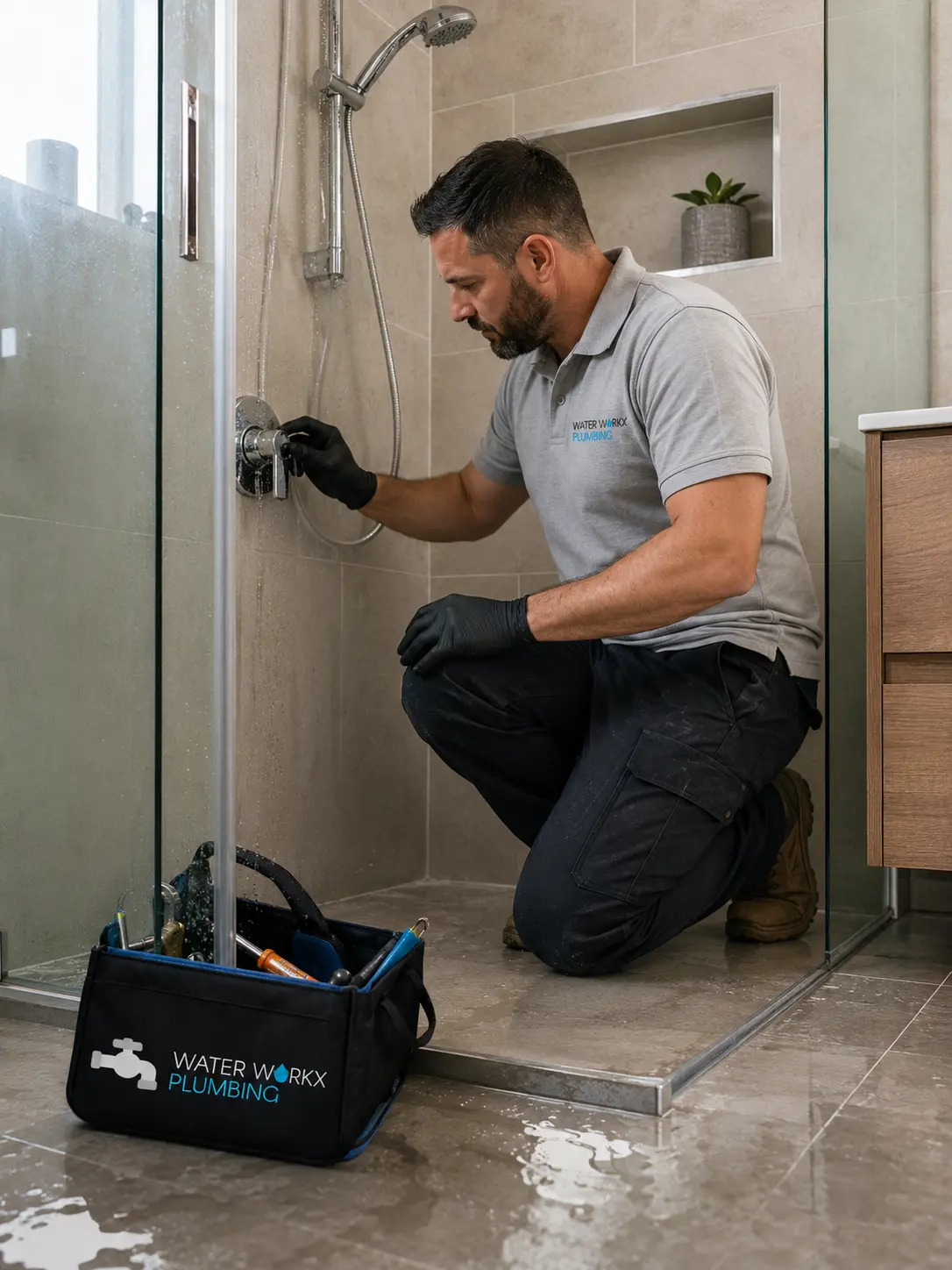
A leaking shower usually comes down to the showerhead, the taps or mixer, the wall outlet, the pipework behind the tiles, or the seals around the screen and floor. The quickest clue is timing. If it drips after the taps are off, it’s the tapware. If water only appears while you’re showering, it’s getting out through the seals, the drain or the tiles. A drip inside the shower can wait a few days. A damp wall or a ceiling stain below can’t.
★★★★★ 5 Star Google Rating
Shower leaking? Let’s find the source
Water Workx Plumbing is fully licensed and insured, with clean and tidy Workx from enquiry through to job completion.
What causes shower leaks?
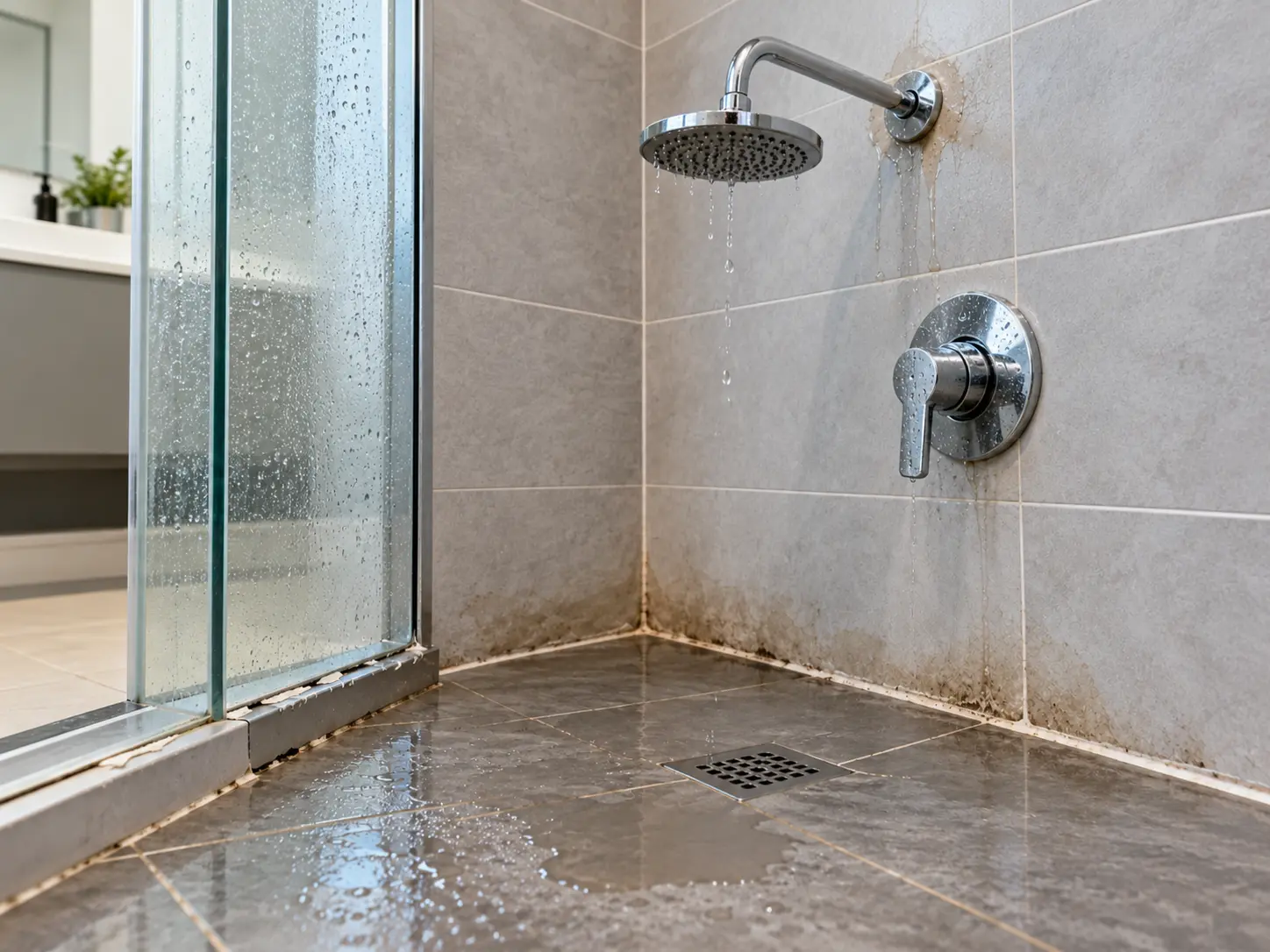
Most people blame the grout, the filler between the tiles. Grout was never waterproof though. Underneath the tiles sits a waterproof layer, and that’s what actually keeps water out of the walls and floor. The flexible seal along the screen and the floor edges is the first line of defence in front of it. When that seal cracks, water gets behind the tiles. If the layer underneath is sound, it catches it. If it isn’t, the water keeps going into the floor and framing.
- Showerhead A worn part inside the tap keeps water dripping after it’s shut off.
- Mixer or taps The small part that shuts the water off has worn out.
- Wall outlet Water gets in where the pipe passes through the tiles.
- Pipework A slow leak behind the tiles soaks the wall from the inside.
- Seals and screen Cracked or lifting silicone lets water escape sideways.
A plumber checks the plumbing first: taps, showerhead, pipework and the drain, which catches people out more often than they expect. If all of that is sound and the leak keeps coming back, the problem is in the tiles or the layer beneath them, and that’s waterproofing work rather than plumbing.
How we find a shower leak
We dry everything down, run the shower and watch what happens and when. The taps and the drain get tested separately, because a leaking drain can put water under the floor while the tiles above look perfect.
| Method | Best for |
|---|---|
| General Plumbing | Tapware and fittings |
| Bath & Shower Drains | Drain-related leaks |
| Renovations | Access to fixtures |
| Emergency Plumbing | Active water spread |
A drip from the showerhead is a different job to a leak that’s reached a wall, a ceiling or a cupboard. Finding the real starting point is what stops you paying to fix the part that was never leaking.
What affects the price?
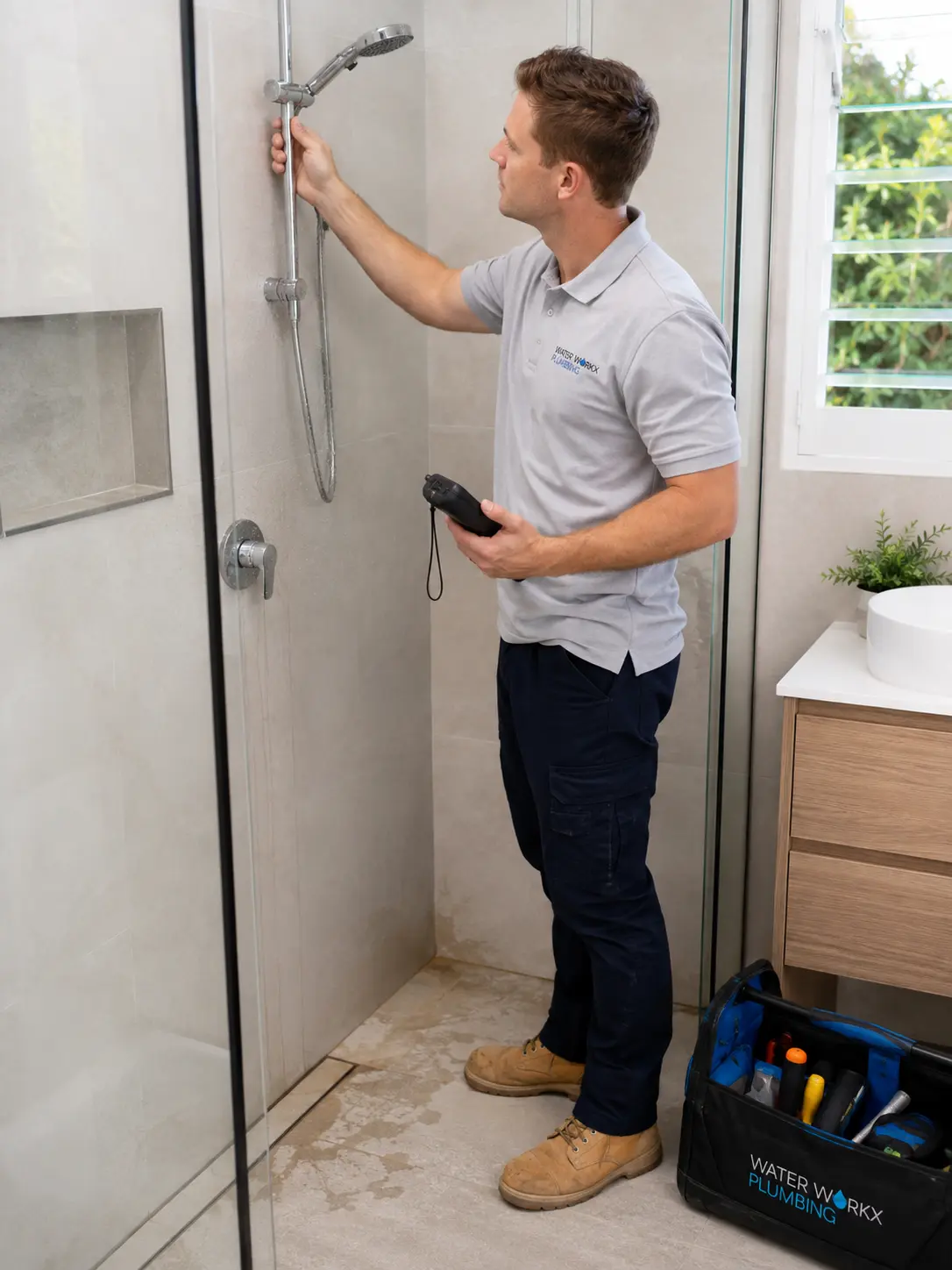
It depends on where the water is actually coming from, how far it has spread, and how easy that part is to reach. We quote after an inspection, because a worn tap part and a leak that’s soaked into the floor are nowhere near the same job.
| What’s blocked | What affects the price | What’s usually needed |
|---|---|---|
| Showerhead drips | Tap type and part access | General Plumbing |
| Mixer or tap leak | Tap model and condition | General Plumbing |
| Wall outlet leak | Access behind fitting | General Plumbing |
| Older bathroom | Age of fittings and tiling | Inspection and repair advice |
| Moisture inside a wall | How far it has spread | Emergency plumbing or renovations |
When to stop and make the call
Drying everything off and watching where the water appears first is genuinely useful, and it’s the one thing that speeds up the whole job. Pulling apart taps, opening walls or forcing fittings is where the risk starts.
Safe to try yourself
- Dry the whole area first
- Note where the water appears
- Move mats off the floor
- Keep the room ventilated
- Check the seal along the screen
Stop and make the call
- Water returns every shower
- A wall stays damp after drying
- The ceiling below is staining
- Water reaches a power point
- The showerhead won’t stop dripping
One thing to skip: A leak you can see on the surface has usually already moved behind it. Avoid harsh chemicals, don’t open up tiled areas yourself, and never ignore water near electrical fittings.
The bottom line
A dripping showerhead is a small job when it’s caught early and the water stays inside the shower. It gets expensive once it reaches a wall, a ceiling or a cupboard, because by then it’s been getting in for months and the damage isn’t just plumbing anymore.
An inspection finds where the water starts, not where it ends up. That’s the difference between replacing one part and repairing a bathroom.
Shower still leaking? Let’s sort it out
Water Workx Plumbing looks after homes across Kingsgrove and the surrounding suburbs. We’ll find where the water is actually coming from, explain it in plain English and give you a fixed price before any work starts. Call Peter and the team.
Leaking Shower FAQs
Why is my shower leaking?
Water can escape from the showerhead, the taps, the wall outlet, the pipework behind the tiles, the drain, or the seals around the screen. When the water appears is the biggest clue to which one it is.
Why does it only leak after a shower?
Because the water is getting out through the tiled area rather than the tapware. Cracked silicone, a leaking drain connection or failed waterproofing under the tiles are the usual suspects.
Is it urgent?
If the water stays inside the shower, usually not. If a wall is staying damp or there’s a stain on the ceiling below, it’s been going on a while and it needs looking at now.
What affects the cost?
Which part is leaking, how easy it is to reach and how far the water has travelled. A tap part is a standard call-out. Water that’s reached the floor structure is a bigger job.
Water Workx Plumbing is fully licensed and insured, with clean and tidy Workx, upfront pricing and a lifetime labour guarantee.
Contact Details
Please feel free to contact us with any questions and queries you might have. We are always happy to offer advice and FREE Quotes.
Send Us a Message
Complete the form below to send an enquiry, or phone us today!