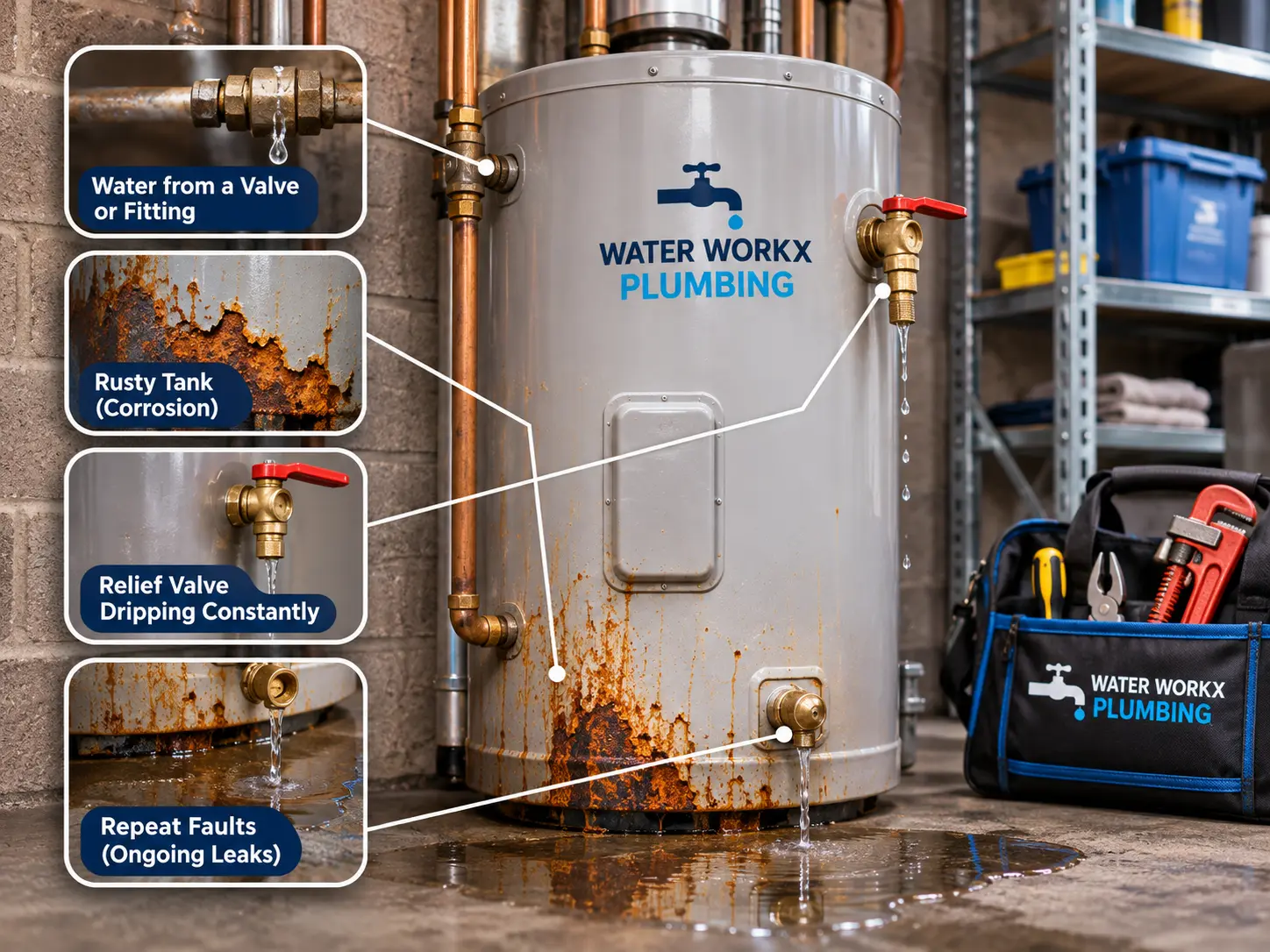
There’s water under the hot water unit. Before you start pricing replacements, the most useful thing you can do is work out where it’s coming from, because that single answer decides whether this is a small repair or a new system.
- Water from a valve or fitting Usually a repair, and often a short one.
- Water from the tank itself The steel has corroded through and can’t be patched.
- The relief valve dripping constantly Different to the occasional release it’s built for.
- Rusty hot water Corrosion inside the tank, and a sign it’s near the end.
- Repeat faults Two repairs close together usually means more are coming.
Age matters alongside that. Most electric storage systems last somewhere between eight and twelve years, so a leak on a five year old unit and a leak on a twelve year old one lead to completely different conversations. We’re called out for this across Lugarno and the wider St George area most weeks, often on the morning someone finds the puddle.
Quick answer:
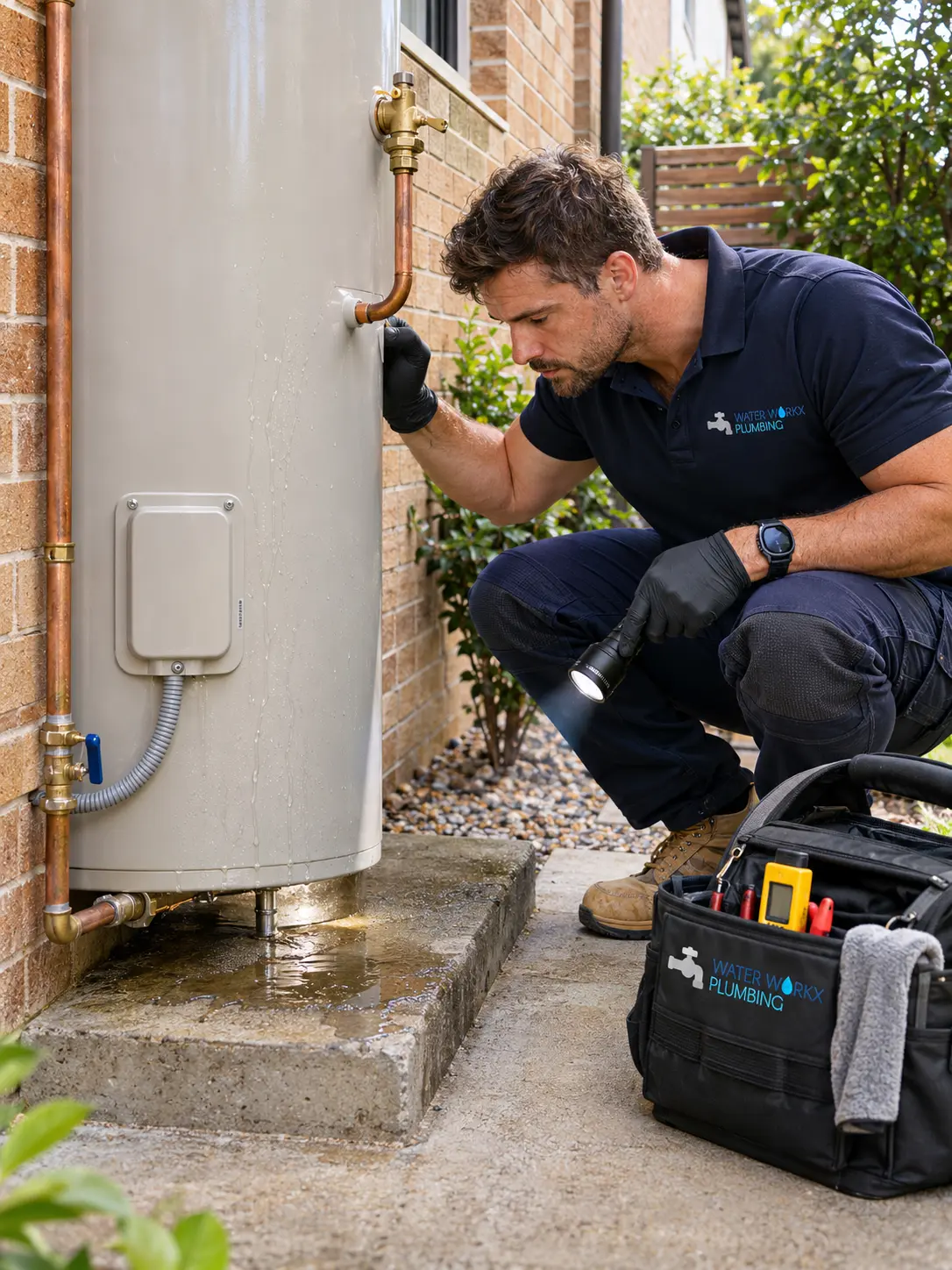
A leak from a valve, fitting or connecting pipe on an electric hot water system is normally a repair. A leak from the tank itself means replacement, because once the steel has corroded through there’s nothing to patch. Age is the other half of the decision: most storage systems last eight to twelve years, so a fault past that mark is usually better replaced than repaired. Call a plumber the same day if water is pooling under the unit, if the hot water has turned rusty, or if the relief valve is dripping constantly.
★★★★★ 5 Star Google Rating
Leaking right now? Same-day assessment available
Water Workx Plumbing is fully licensed and insured, with clean and tidy work from enquiry through to job completion.
Why electric hot water systems leak
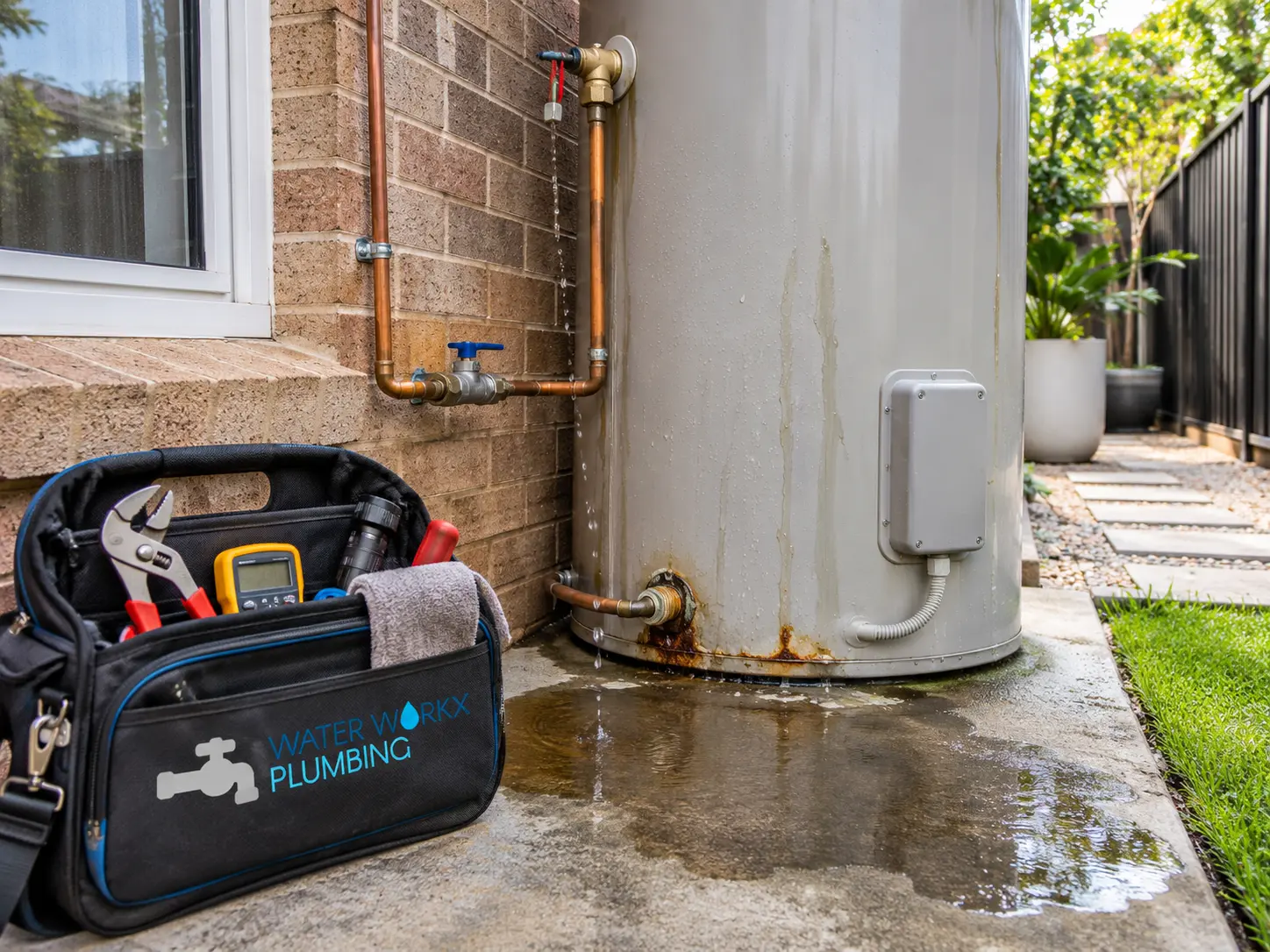
Inside a storage tank is a sacrificial anode, a metal rod that corrodes on purpose so the tank doesn’t. It wears away over the years, and once it’s gone the water starts working on the steel instead. That’s the countdown clock on every storage system.
- The anode has worn out Once it’s gone, the tank itself starts corroding from inside.
- A corroded tank Rust finds a weak point and the tank begins leaking.
- A failed relief valve Constant dripping rather than the occasional release it’s built for.
- Loose or aged fittings Connections above the tank weep as seals harden.
- Sediment buildup Minerals settle around the element, creating hot spots that stress the steel.
Replacing the anode partway through a system’s life can extend it, which is worth knowing if your unit is around the five to seven year mark and still working well. Once the tank itself is leaking, that option has passed.
How we assess a leaking system
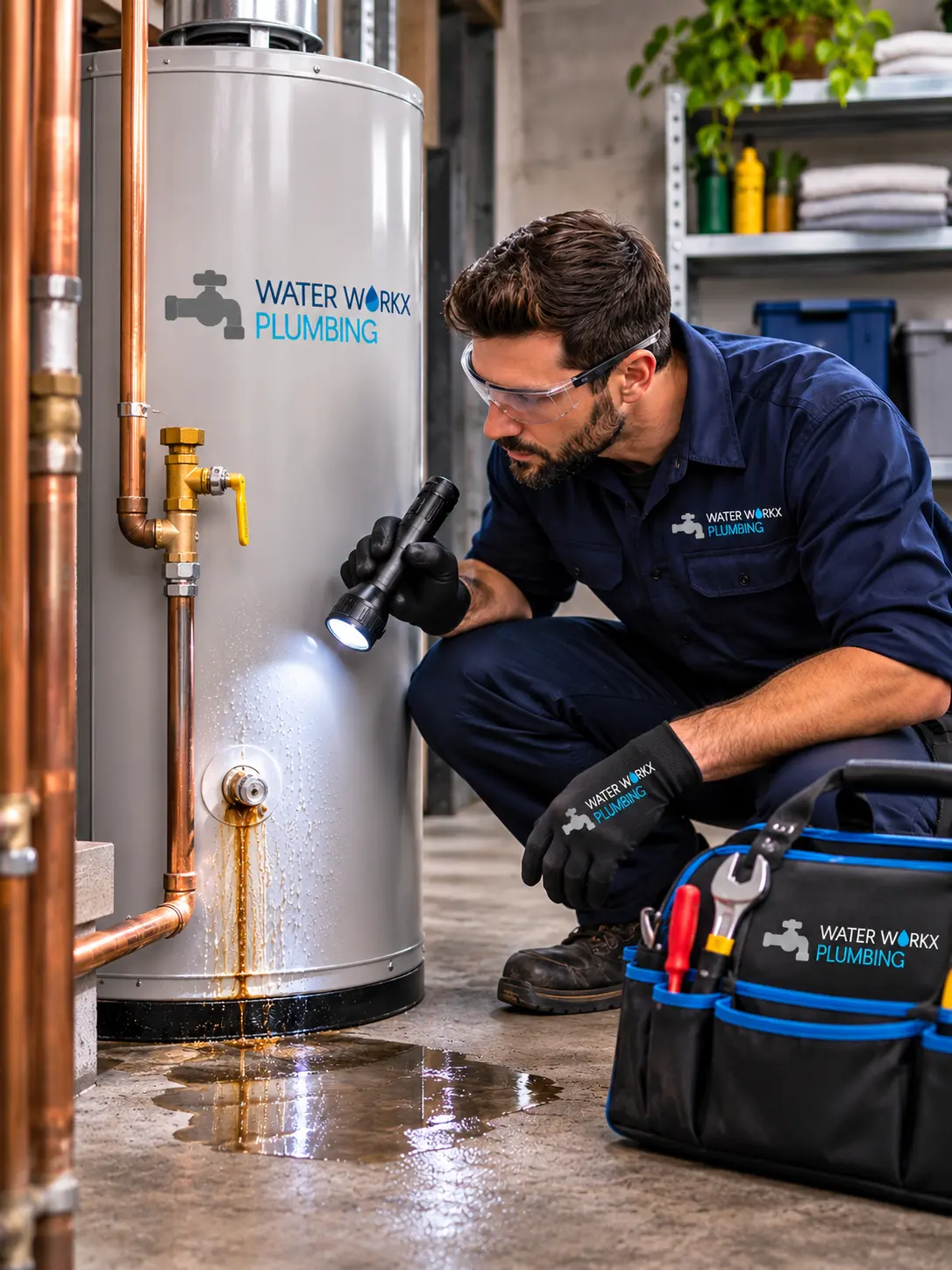
The first job is finding exactly where the water is coming from, because that single answer decides most of it. Then we look at age, service history and whether parts are still available for that model.
| Method | Best for |
|---|---|
| Hot water systems | Tanks, elements and valves |
| General plumbing | Fittings and connections |
| Leak detection | Water appearing with no clear source |
| Emergency plumbing | Leaking or failed units |
If the leak is at a valve or fitting on a unit that’s otherwise healthy, we repair it and leave the rest alone. If it’s the tank, we’ll say so immediately rather than quoting a repair on something that won’t hold.
What affects the price?
A repair depends on the part and the access. A replacement depends on the size, the type and what’s involved in getting the old unit out and the new one connected. We confirm the price after an inspection.
| What’s blocked | What affects the price | What’s usually needed |
|---|---|---|
| A dripping relief valve | Valve type and access | Valve replacement |
| A leaking fitting or pipe | Pipe condition and access | General plumbing |
| A failed element | Unit type and part availability | Hot water repair |
| A leaking tank | Unit size, type and access | Hot water replacement |
| Upgrading to a bigger unit | New size and connection changes | System upgrade |
When to stop and make the call
Finding where the water is coming from and reading the unit’s install date are both useful and safe. Anything involving the electrical connection, the valves or draining the tank isn’t.
Safe to try yourself
- Look at where the water is coming from
- Check the unit’s label for its install date
- Note how often it’s needed repairs
- Keep the area around the unit clear
- Turn off the isolation valve if it’s leaking badly
Stop and make the call
- Water is pooling under the tank
- The hot water looks rusty
- The relief valve drips constantly
- The unit bangs or rumbles
- There’s no hot water at all
One thing to skip:Don’t try to drain the tank, replace the anode or adjust the relief valve yourself. These units hold scalding water under pressure, the electrical connection needs the right licence, and older drain valves often don’t reseal once they’ve been opened.
The bottom line
A five year old system with a faulty valve is worth repairing without a second thought. A twelve year old one leaking from the tank, on its third fault, is not, however cheap the next repair sounds.
The question isn’t what this repair costs. It’s what the next two cost, and whether the unit will still be standing after them. A straight answer on that saves more money than any discount.
Not sure if it’s worth repairing? Let’s find out
Water Workx Plumbing looks after homes across Lugarno and the wider St George area, with 24/7 emergency service when hot water fails at the worst time. We’ll assess the unit, give you an honest answer on repair or replace, and a fixed price before any work starts. Call Peter and the team.
Electric Hot Water FAQs
Why is water pooling under my hot water system?
If it’s coming from the tank itself, the steel has corroded through and the unit needs replacing. If it’s from a valve, fitting or pipe above the tank, that’s usually a repair.
How long does a hot water system last?
Most storage systems last around eight to twelve years. Water quality, maintenance and whether the anode has ever been replaced all affect where yours lands.
Why is my hot water rusty?
Rust in the hot water but not the cold points to corrosion inside the tank. Once that’s started, replacement is usually the sensible option.
Water Workx Plumbing is fully licensed and insured, available 24/7 for emergency plumbing, with clean and tidy workmanship, upfront pricing and a lifetime labour guarantee.
Contact Details
Please feel free to contact us with any questions and queries you might have. We are always happy to offer advice and FREE Quotes.
Send Us a Message
Complete the form below to send an enquiry, or phone us today!