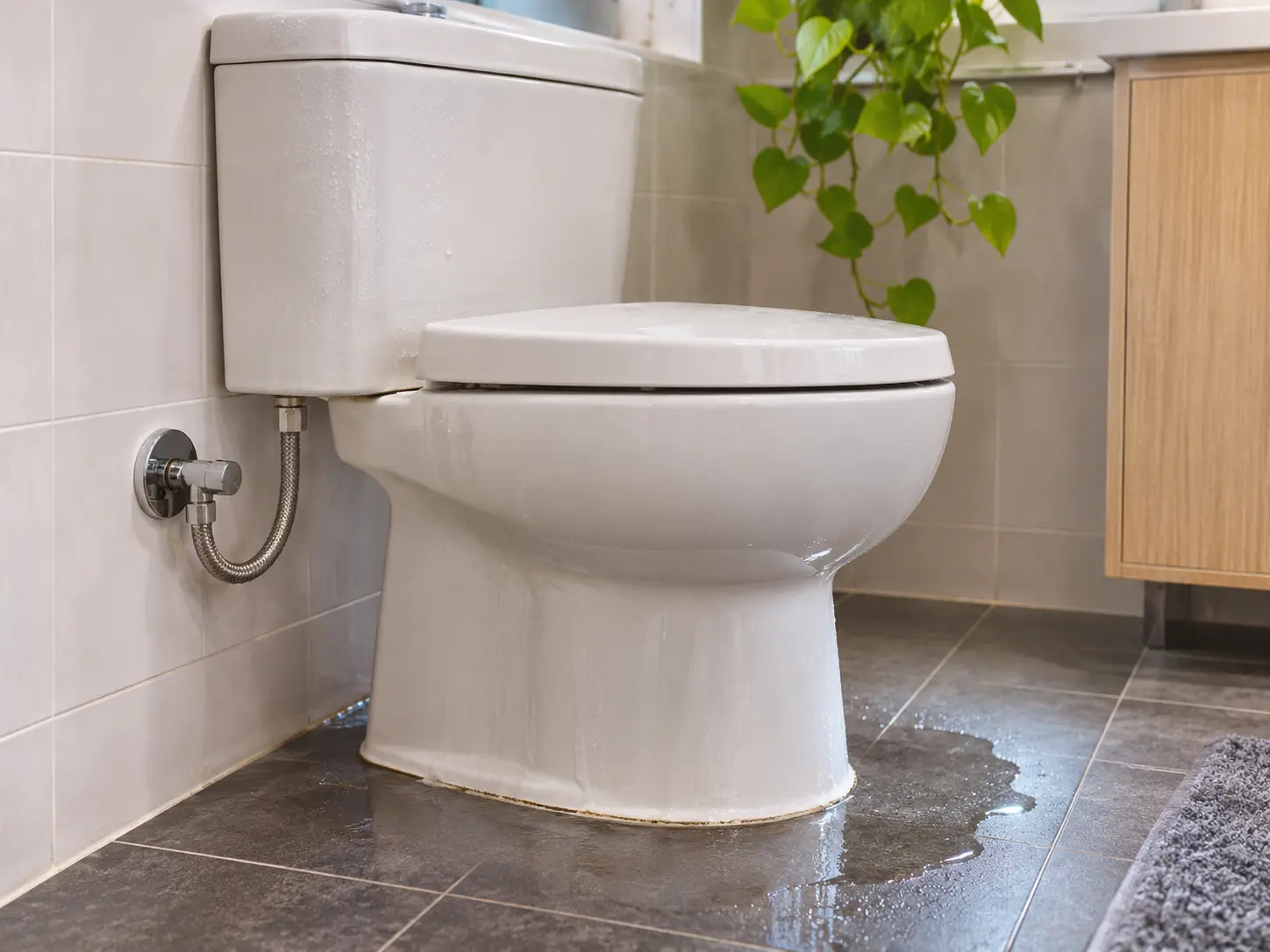
You mop it up, and a day later it’s back. Then you start noticing a smell, or the floor near the toilet feels slightly soft underfoot.
Water at the base of a toilet is worth taking seriously because of where it goes. It runs under the pan, soaks into the floor beneath, and in a timber floor it reaches the subfloor and joists. By the time anything looks wrong on the surface, it has usually been happening for months.
The good news is that this is one of the more diagnosable problems in a bathroom. Where the water comes from and when it appears narrow it down quickly, and most of the causes are straightforward repairs. In Kingsgrove and the wider St George area we see it most in bathrooms that were retiled at some point, with the toilet taken off and refitted afterwards.
How urgent is the water around your toilet?
Condensation on a humid day is harmless. Waste water under the pan is not. Tick what you’re seeing for a rough guide.
Where the water is coming from
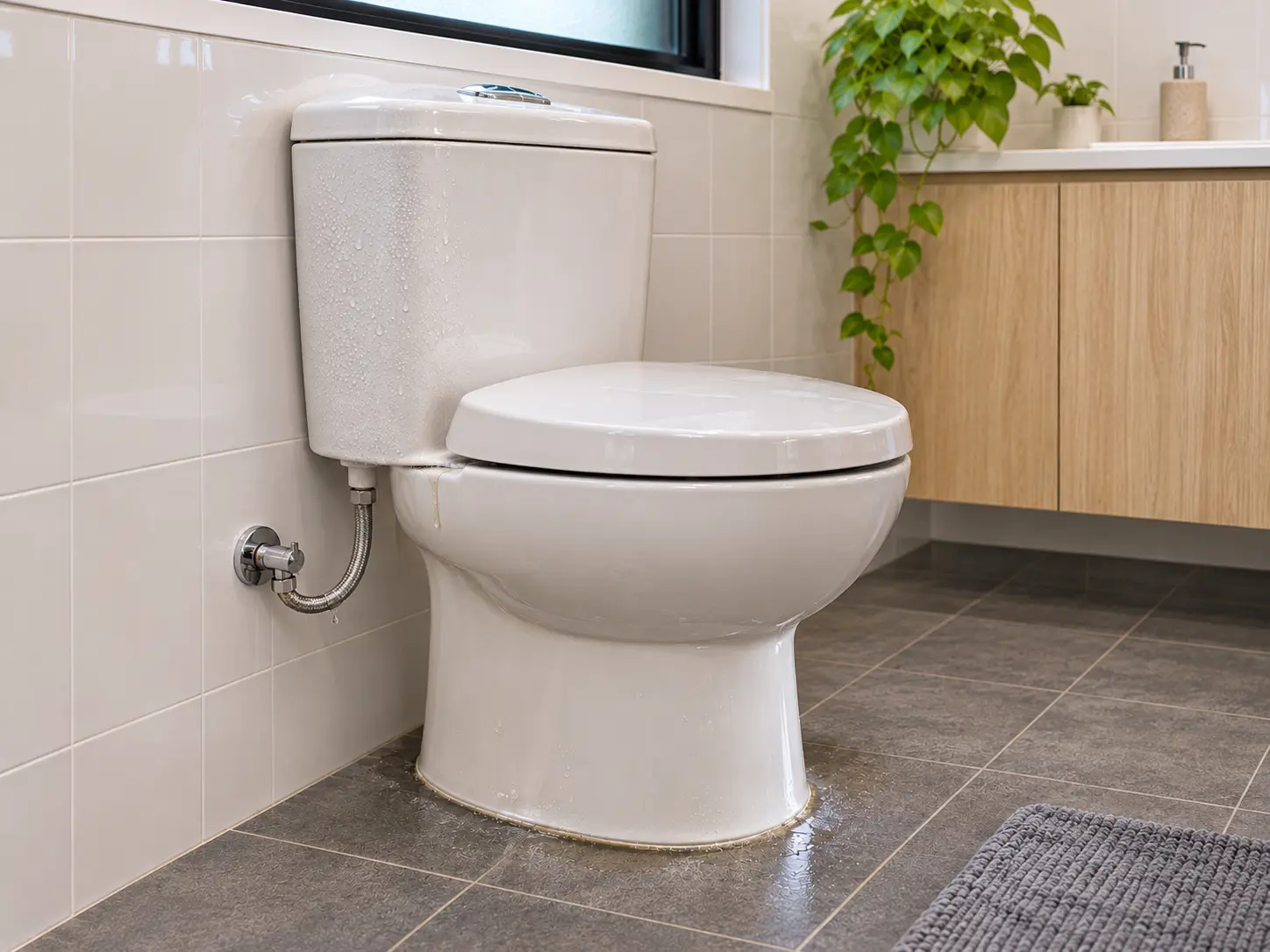
Your toilet has three places water can escape near the floor, and each one behaves differently, which is what makes this diagnosable without pulling anything apart. The connection between the cistern and the pan weeps constantly once its rubber washer hardens. The seal where the pan meets the drain only leaks when you flush, because that’s the only time waste water passes through it, and that one is the serious version since it’s waste water going under your floor. The water supply line feeding the cistern drips regardless of use, which usually shows as clean water appearing steadily. Then there’s condensation, which is genuinely common in summer: cold water sitting in the cistern makes the outside sweat, and it runs down to the floor. The giveaway is that the whole cistern is damp, the water is clear, and it only happens in humid weather.
1
A failed pan seal
The seal between pan and drain perishes, so waste escapes on flush.
2
A loose pan
Movement breaks the seal underneath and the toilet rocks slightly.
3
The cistern-to-pan washer
The rubber washer between the two has hardened and weeps.
4
The supply connection
A leaking inlet fitting or isolation valve drips constantly.
5
A cracked pan
A hairline crack in the porcelain, usually leaking only when full.
Signs it’s a leak, not condensation
These are the things that shift the answer from harmless to worth acting on.
It comes back after mopping
Condensation dries up and stays gone once the humidity drops. A leak returns.
Water appears after flushing
That timing points straight at the seal between the pan and the drain.
A smell along with it
Clear condensation doesn’t smell. Waste water getting under the pan does.
The toilet moves slightly
Any rocking means the fixings have loosened and the seal underneath is being broken.
Why the floor underneath matters
Waste water doesn’t stay in the bathroom. It soaks into the floor beneath the pan, and in a timber floor it reaches the subfloor and joists where nothing dries properly. The surface gives almost no warning, which is why people find this after months rather than days. Soft flooring, a smell that never clears, or a toilet that has started to move are all signs the water has been there a while. Replacing a seal costs a fraction of replacing a floor, which is the whole argument for acting on it early.
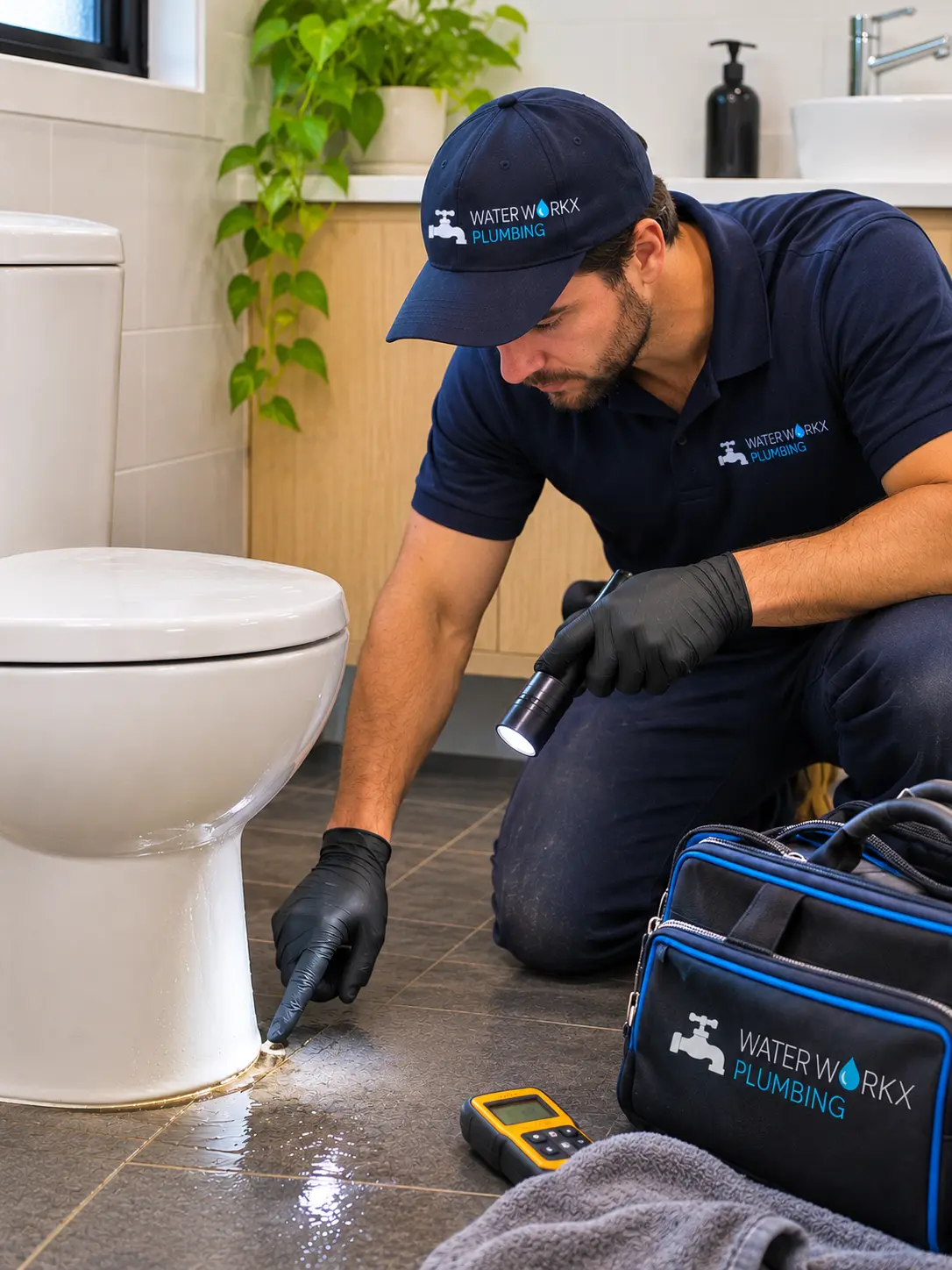
How we find a toilet base leak
We dry everything thoroughly, then watch what happens and when. A few flushes, some time sitting idle, and a check of each connection separately usually answers it without guesswork.
Step 01
Dry and observe
Everything gets dried down, including under and behind the pan, then we run the toilet and watch where moisture appears first and at what point in the cycle.
What we look for
- When the water appears
- Whether the pan moves at all
- Condition of the floor underneath
Step 02
Test each connection
The supply fitting, the cistern-to-pan washer and the pan seal are checked separately, because each one leaks at a different time.
Step 03
Repair and refit
If the pan needs lifting, it gets refitted on a new seal and secured properly, because a pan that moves will break any seal eventually.
- Source found
- Seal replaced
- Pan secured
Method matched to cause
Method matched to cause
A weeping supply fitting and a failed pan seal are completely different jobs. If the floor beneath has been wet a long time, we’ll tell you what we find rather than putting a toilet back down on soft flooring.
- Supply check
- Washer check
- Pan seal
- Floor check
What affects the cost?
It depends on which connection is leaking and whether the pan has to come up. Floor type matters too, since a tiled floor takes more care than vinyl.
| Situation | Likely method | What affects the job |
|---|---|---|
| A leaking supply fitting | Repair the connection | Access behind the pan |
| A weeping cistern washer | Replace the washer | Toilet type and part availability |
| A failed pan seal | Lift, reseal and refit | Whether the pan must be lifted |
| A loose or rocking pan | Refit and secure | Floor condition and fixings |
The paper test
Dry the whole area completely, then lay a few sheets of dry paper towel around the base of the toilet and leave them. Don’t flush. If the paper is still dry after a few hours, flush once and check again. Paper that only gets wet after flushing points at the pan seal. Paper that’s damp without any flushing points at the supply side or condensation.
Safe to check
- Dry the area completely
- Lay dry paper around the base
- Note whether water appears after flushing
- Check if the toilet rocks when you sit
Time to call a plumber
- The water keeps coming back
- There’s a smell along with it
- The floor nearby feels soft
- Water appears straight after flushing
The bottom line
A puddle that keeps returning has a source
Water at the base of a toilet is either condensation or a leak, and the two look similar for about a day. The paper test and the timing sort it out quickly: clear water on a humid day is one thing, water appearing after every flush is another.
What makes this worth acting on is what’s underneath. Waste water soaking into a bathroom floor doesn’t stay in the bathroom, and a seal costs a fraction of what a floor does.
Remember this:If it only appears after you flush, it’s the seal under the pan. That’s waste water going into your floor.
Toilet Base Leak FAQs
Why is there water around the base of my toilet?
Usually a failed seal between the pan and the drain, a leaking connection from the cistern, or a dripping supply fitting. In humid weather it can also be condensation running off the cistern.
How do I tell condensation from a leak?
Condensation leaves the whole cistern damp, the water is clear and it only happens in humid weather. A leak comes back regardless of the weather, often with a smell.
Is it dangerous?
Waste water under the floor is a hygiene issue and a damage one. It soaks into the subfloor, and timber floors can rot before anything looks wrong on the surface.
Can I just seal around the toilet?
It’s the most common mistake we see. Sealing traps the water underneath instead of stopping it, so the leak continues out of sight.
Why does my toilet rock slightly?
The fixings have loosened or the floor beneath has deteriorated. Movement breaks the seal underneath, so a rocking toilet usually leads to a leak if it hasn’t already.
How long does the repair take?
A supply fitting or washer is usually a short visit. Lifting and resealing the pan takes longer, and if the floor underneath has been wet, that gets assessed too.
Water keeps returning? Let’s sort it out
Water Workx Plumbing looks after homes across Mortdale and the wider St George area. We’ll find exactly where the water is coming from, explain it in plain English and give you a fixed price before any work starts. Call Peter and the team.
Contact Details
Please feel free to contact us with any questions and queries you might have. We are always happy to offer advice and FREE Quotes.
Send Us a Message
Complete the form below to send an enquiry, or phone us today!