You finish your shower, come back half an hour later, and there’s still a pool sitting near the drain. The grout around it looks darker than the rest, and there’s a smell in the bathroom that cleaning doesn’t shift.
Two very different problems look identical from the doorway. Either the waste pipe is restricted and water can’t get away fast enough, or the floor itself doesn’t fall toward the drain and water has nowhere to go. One is a drain clear. The other is a floor problem, and that’s a much bigger conversation.
Telling them apart is easier than it sounds, and it’s worth doing before anyone starts quoting. Across Hurstville and the wider St George area we see the first version constantly in family bathrooms, and the second mostly in older homes or where a previous renovation cut a corner.
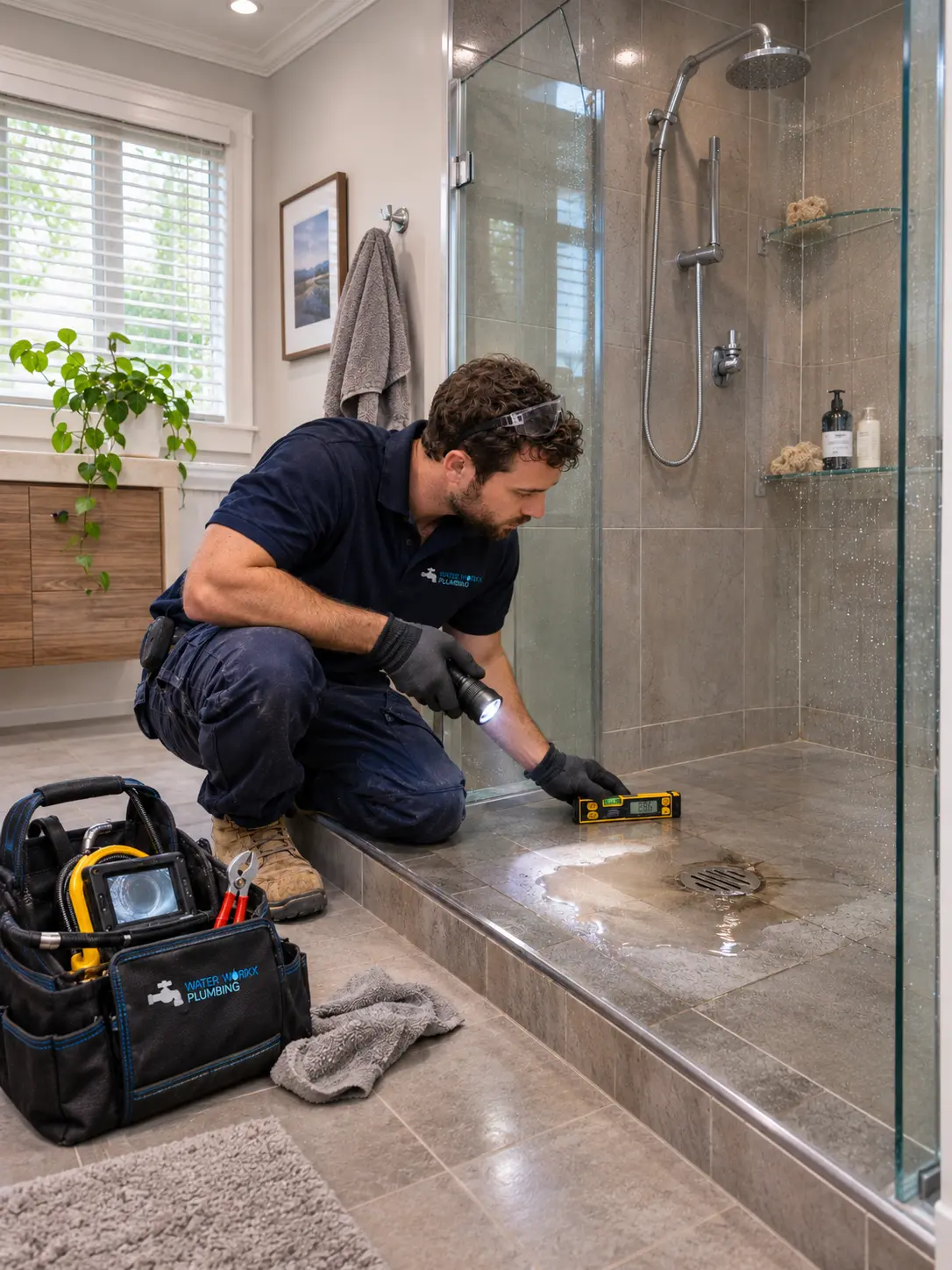
Is it the drain or the floor?
A shower that drains slower than it used to is a blockage. A shower that has always left a puddle in the same spot is a floor. Tick what applies for a rough guide.
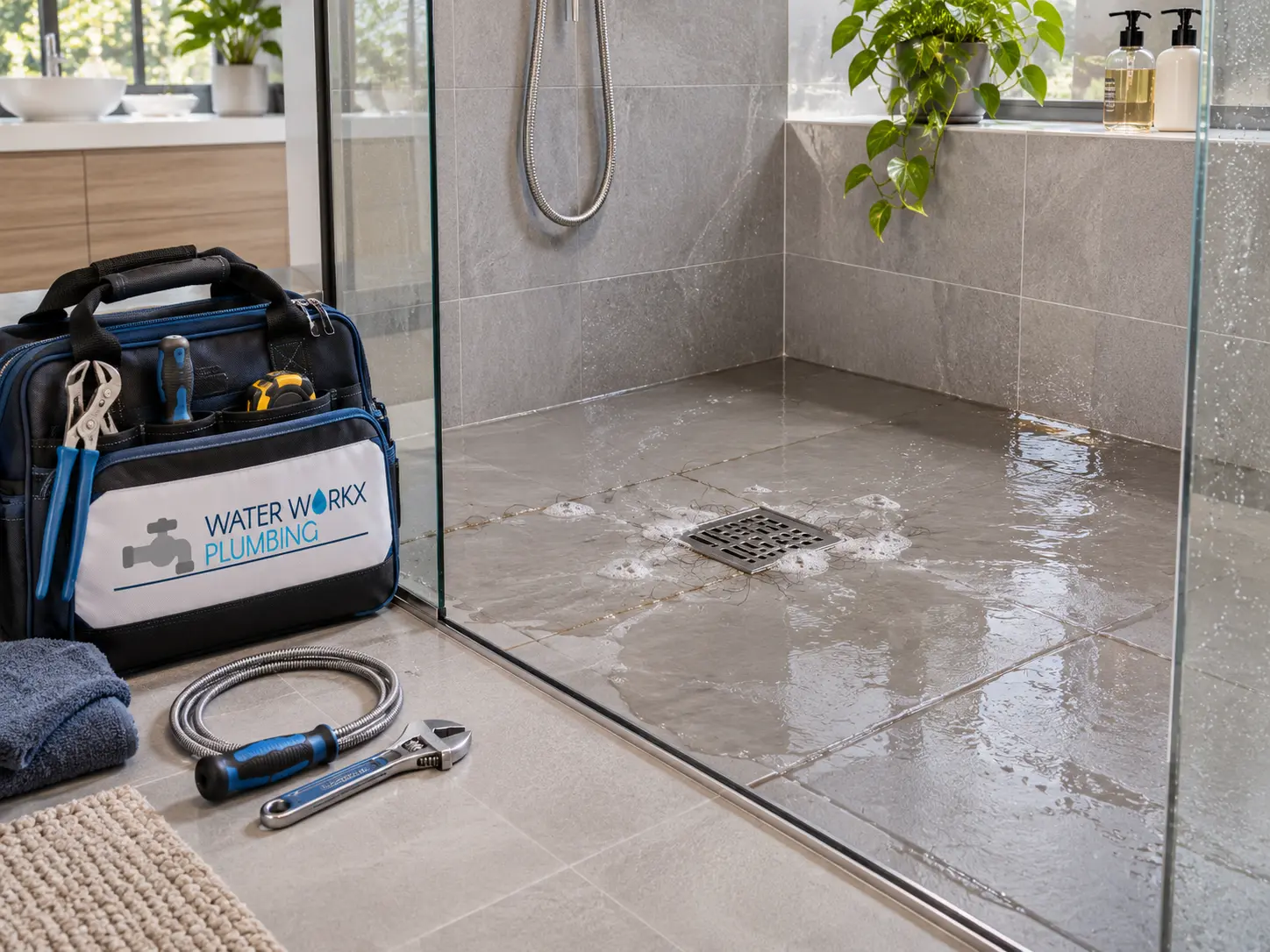
What stops a shower draining
A shower floor is supposed to do one thing: send every drop toward the waste. That depends on two things working together, and either can let you down. The first is the waste pipe staying clear. Hair is the main culprit, because it doesn’t break down, and once a few strands catch at the grate they start collecting soap residue, shampoo and skin cells until there’s a soft plug sitting in the trap below. The second is the fall of the floor, meaning the gentle slope built in when the bathroom was tiled. If that slope is too shallow, uneven, or dips in the wrong place, water sits there regardless of how clear the pipe is. That one isn’t a plumbing fault, it’s how the floor was built.
1
Hair buildup
Hair catches at the grate and collects everything that follows.
2
Soap residue
Soap and product coat the pipe wall and narrow it over time.
3
A blocked trap
The bend below the waste fills with a soft plug of buildup.
4
Not enough fall
The floor doesn’t slope enough toward the drain to clear water.
5
A dip in the floor
A low spot away from the waste holds water no matter what.
Signs it’s more than a bit of hair
A slow shower is normal maintenance. These are the signs something else is going on.
It’s getting worse steadily
Gradual slowing over months points to buildup narrowing the pipe.
A smell that keeps returning
Waste sitting in the trap gives off a smell that cleaning won’t shift.
Water gurgles as it drains
Air being forced past a restriction further down the waste line.
Dark or soft grout near the drain
Water sitting in one place long enough starts affecting what’s underneath.
Why standing water matters
A puddle that dries by itself overnight is just annoying. Water that sits in the same spot after every shower, day after day, is working on the grout, then the adhesive, then eventually the waterproofing beneath the tiles. That’s the layer actually keeping water out of your floor structure, and once it’s compromised the problem stops being about drainage. It’s worth sorting while it’s still a drain conversation rather than a bathroom one.
How we sort out a slow shower
The first job is working out which of the two problems you actually have, because the answers are completely different.
Step 01
Test the drainage
We run the shower and watch how fast it clears, then check whether other fixtures in the bathroom are slow too. That tells us whether the restriction is local or further down the line.
What we look for
- How fast the floor clears
- Whether other drains are slow
- Where water sits once cleared
Step 02
Clear the waste
If it’s a blockage, the trap and waste line get cleared properly rather than just opening a channel through the middle of it.
Step 03
Check the floor
With the water running clear, we check where water actually goes. If it still pools away from the waste, the fall is the issue and we’ll tell you that straight.
- Drain cleared
- Flow tested
- Fall assessed
Method matched to cause
Method matched to cause
Hair and soap buildup clears one way. A floor that doesn’t fall correctly isn’t a drain job at all, and no amount of clearing will change it.
- Grate clear
- Trap clean
- Waste line clear
- Fall check
What affects the cost?
It depends on where the blockage sits and whether the floor turns out to be part of the problem. We confirm the price after an inspection, before any work starts.
| Situation | Likely method | What affects the job |
|---|---|---|
| Hair at the grate | Clear the grate and trap | Grate type and access |
| Slow draining over months | Clear the waste line | How far the buildup extends |
| A smell with slow draining | Clear and flush the line | Buildup level and pipe condition |
| Several bathroom drains slow | Clear the shared line | Where the restriction sits |
The test that tells you which problem you have
Clear whatever hair you can see at the grate first, then run the shower for a minute and turn it off. Watch where the water goes. If it drains away steadily, even slowly, the floor is doing its job and you’re dealing with a blockage. If water runs toward a spot that isn’t the drain and stays there, the fall is the problem.
Safe to check
- Pull visible hair from the grate
- Run the shower and watch where water goes
- Check whether the basin is slow too
- Fit a hair catcher over the waste
Time to call a plumber
- It’s slow after clearing the grate
- The smell keeps coming back
- Water pools away from the drain
- Other bathroom drains are slow too
The bottom line
Standing water is worth sorting early
A shower that drains slowly is usually hair, and hair is cheap to deal with. The reason to act rather than live with it is what standing water does over time to the grout and the layers beneath it.
The distinction worth holding onto is simple. If it drains but slowly, that’s a pipe problem and it’s fixable. If water sits somewhere that isn’t the drain, that’s a floor problem, and clearing the pipe a second time won’t change a thing.
Remember thisA slow shower is a blockage. A puddle that never moves is a floor. They look the same and they aren’t.
Shower Drainage FAQs
Why is my shower draining slowly?
Almost always hair bound together with soap residue, caught in the grate or the trap below it. It builds gradually, which is why the shower slows over months rather than overnight.
Why does water sit in one spot on the floor?
That usually means the floor doesn’t fall toward the waste at that point. It’s a tiling and floor issue rather than a blocked pipe, and clearing the drain won’t change it.
Why does my shower drain smell?
Buildup sitting in the trap gives off a smell of its own. If the drain also runs slowly, the smell will keep coming back until the line is properly cleared.
Can I use drain cleaner in the shower?
We’d avoid it. It rarely clears a solid hair plug, it can damage older pipes, and it leaves a chemical sitting in the trap for whoever works on it next.
How do I stop it happening again?
A hair catcher over the waste does most of the work. Rinsing the grate out every few weeks takes seconds and prevents most of these blockages forming.
Is standing water damaging?
Over time, yes. Water sitting in one spot after every shower works on the grout first, then the layers underneath, and that’s where it stops being a simple fix.
Shower still holding water? Let’s sort it out
Water Workx Plumbing looks after homes across Hurstville and the wider St George area. We’ll clear the waste, check whether the floor is part of the problem and give you a fixed price before any work starts. Call Peter and the team.
Contact Details
Please feel free to contact us with any questions and queries you might have. We are always happy to offer advice and FREE Quotes.
Send Us a Message
Complete the form below to send an enquiry, or phone us today!